The Dubrovnik issue
Three February Days When Dubrovnik Belongs to Saint Blaise
Banner-raising, doves, muskets and relics: how to spend the Festa of Sveti Vlaho on 2 and 3 February 2026, and what to see in the quiet days around it.

By Daniel OkaforThe city beyond the cruise-ship crowds

On the morning of 3 February the Stradun does something it never manages in August: it falls quiet. The reliquaries come out of the cathedral treasury, the banners come out of the church, and a column of men in eighteenth-century costume walk the limestone carrying muskets they are forbidden to fire inside the walls. For one day the Old Town stops being a destination and goes back to being a parish, which is the single best reason to see Dubrovnik in winter.
The Festa of Sveti Vlaho (Saint Blaise) has been marked here since the tenth century, and in 2009 UNESCO put it on the intangible heritage list. In 2026 the two days that matter are Monday 2 February and Tuesday 3 February. Those two days run to a fixed shape: what you can walk into without a ticket, what needs booking, and how to fill the flat days on either side while half the Old Town is shuttered for the season.
The banner goes up on 2 February

Everything starts at Orlando's Column (Luža Square, the wide end of the Stradun by the bell tower). On 2 February the white banner of St Blaise is raised on the column and doves are released in front of the cathedral, and the square packs solid. It is an open public space with no ticket and no limit, which sounds group-friendly and is not: this is the tightest crush in the city on both 2 and 3 February. If you are travelling with anyone small, elderly or unsteady, watch from the Stradun side rather than trying to get in front of the column, and if you are guiding a party, brief them somewhere else and agree a meeting point outside Luža entirely. Forty minutes early is the difference between seeing the banner go up and hearing it.
While you wait, look at the knight's forearm. That length is the old Dubrovnik ell, the Republic's official unit of cloth measure, cut into the stone where any merchant could check a trader's yard against it. Luža was not a stage; it was the legal centre of a small, litigious, extremely well-organised state. The ceremony still happens here for that reason and not for the backdrop.
Plan your Dubrovnik trip
Live prices from our booking partners.
Free cancellation on many rooms. We may earn a commission when you book.
Feast day morning at the saint's own church
Church of St Blaise (Luža Square, facing Orlando's Column) is the literal centre of the Festa, free to enter, no ticket and no door policy at all. Anyone may walk in, groups included, but the nave is small and on 3 February it fills completely and stays that way. Guides brief outside on the steps as a matter of routine, and the church closes to sightseers during Mass, so check the board on the door before you walk anyone in. The polite move on feast day is to come as a worshipper or come later.
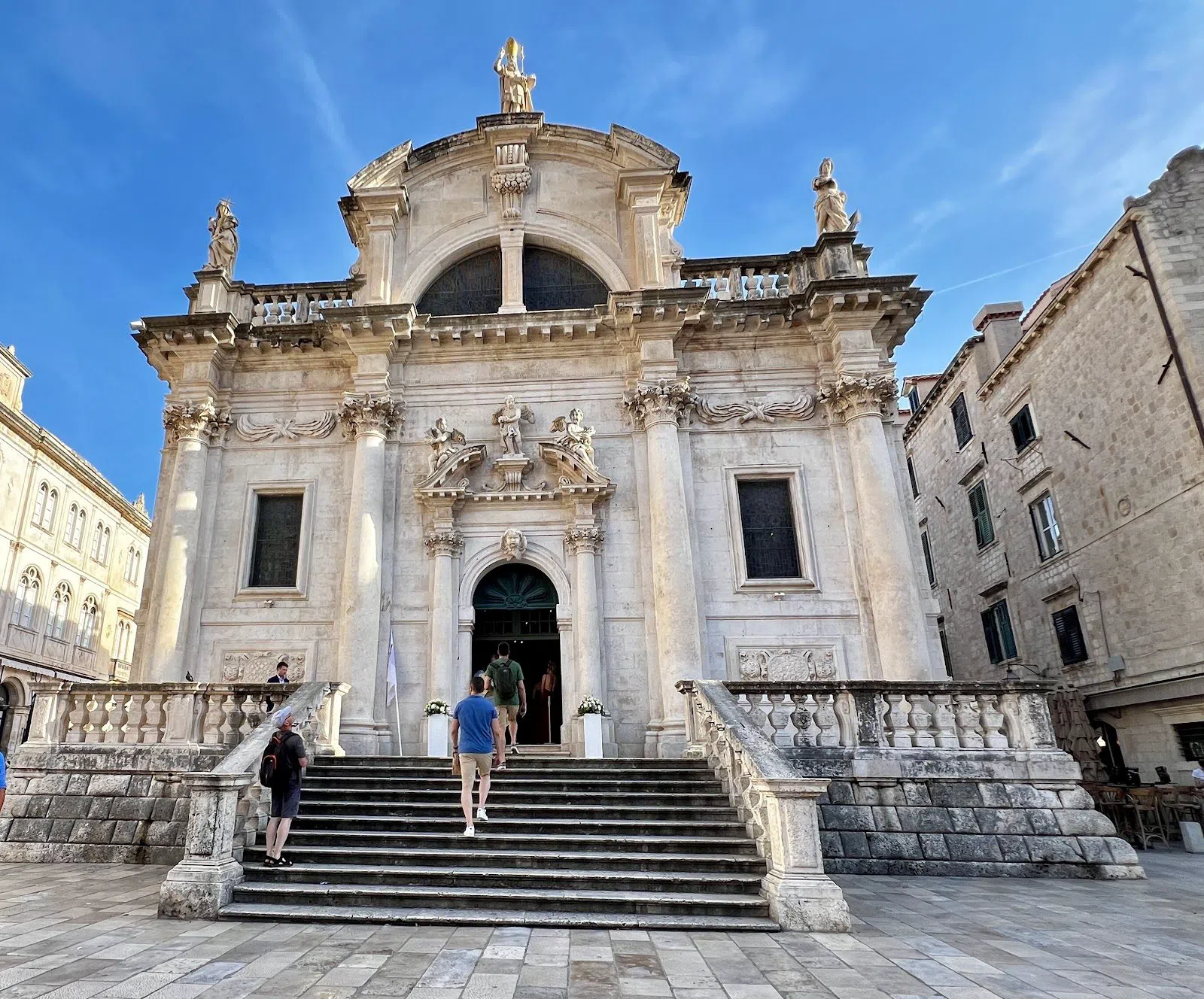
Two things are worth queuing for. The first is the silver statue of the saint on the high altar, holding a scale model of the city in his hand. It is the oldest surviving image of Dubrovnik, and it shows the city as it stood before the 1667 earthquake rebuilt half of what you walked past to get here. The second is the blessing of throats, given all day with two crossed candles held to the neck. Blaise was a physician and a bishop before he was a martyr, and the tradition comes from a boy said to have been saved from choking on a fishbone; the candles are the whole ritual. You do not need to be Catholic and nobody will ask. If you would rather not take the blessing, stand aside and let the queue pass. This is a working ceremony rather than a photo opportunity, though photography from the back of the nave is normal and unremarked.
For the quietest look at the church, come back on the 4th, mid-morning. It is the same building minus two thousand people.
The musketeers and the powder rule
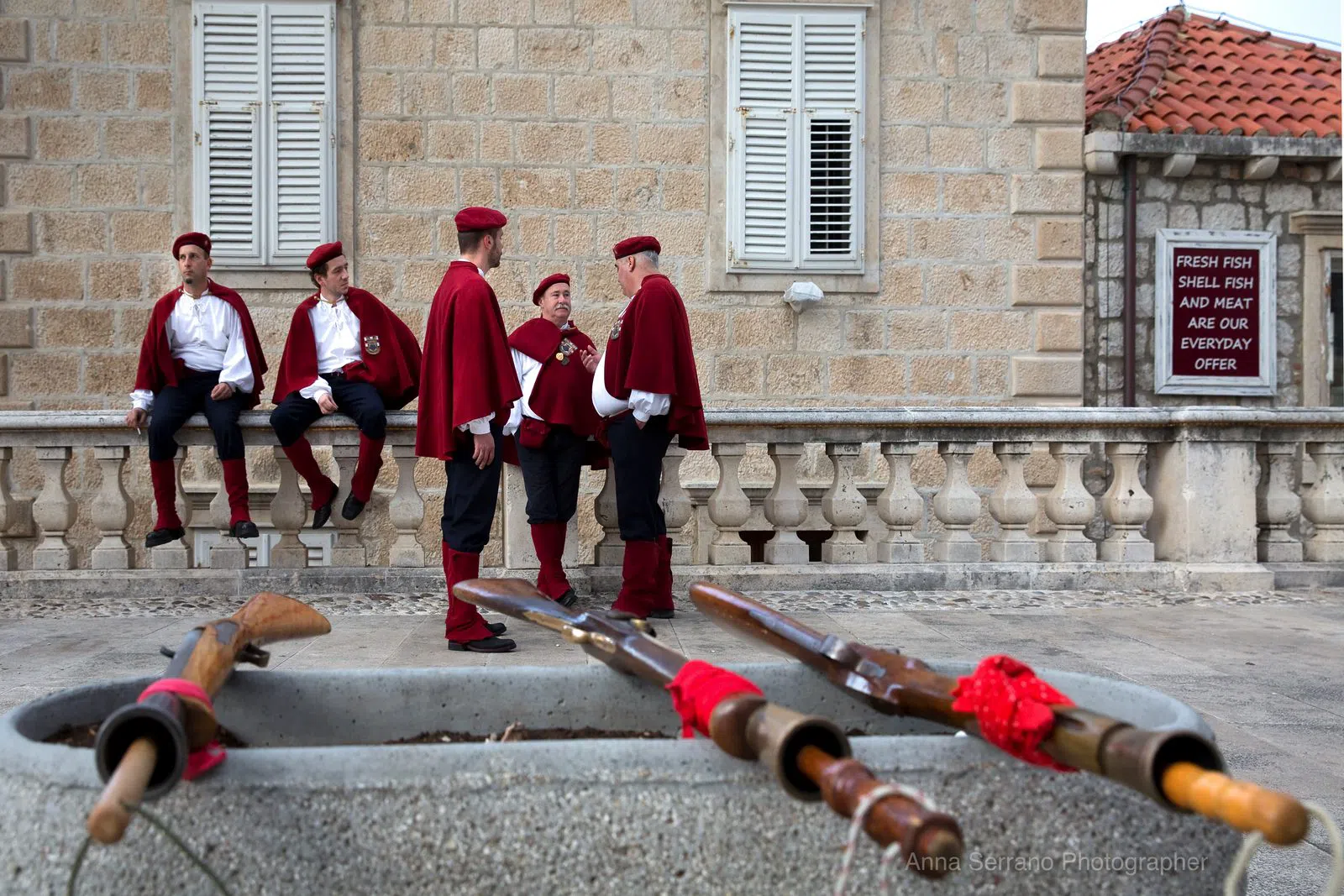
The procession is led by the Dubrovački trombunjeri (the Dubrovnik Musketeers), and they are not a venue you can book. They are a volunteer association that appears in public, free to watch, in any crowd size. If you want them at a private event you email them months ahead, and the answer depends on their calendar, not your budget.
The trombunjeri fire their salutes only outside the walls, never within, because the Republic banned gunpowder inside the city: a rule about fire, and about who was allowed to be armed in a state that survived by being cautious rather than strong. That single detail tells you more about Dubrovnik than any wall tour will. Their costumes and their trombuni are made specifically for the Festa. So if you want to hear the salute rather than just see the guns, position yourself outside the gates rather than in the middle of the Stradun. Everyone else will be doing the opposite.
What the procession is actually carrying
The relics carried through the streets on 3 February live the rest of the year in Dubrovnik Cathedral and its Treasury (Poljana Marina Držića, immediately behind the Rector's Palace). The cathedral is free; the Treasury runs roughly €3 to €5. Inside are the head, arm and leg reliquaries of St Blaise, the finest surviving work of the Dubrovnik goldsmiths: gold, enamel and Byzantine filigree, several of them older than most of the buildings around them.
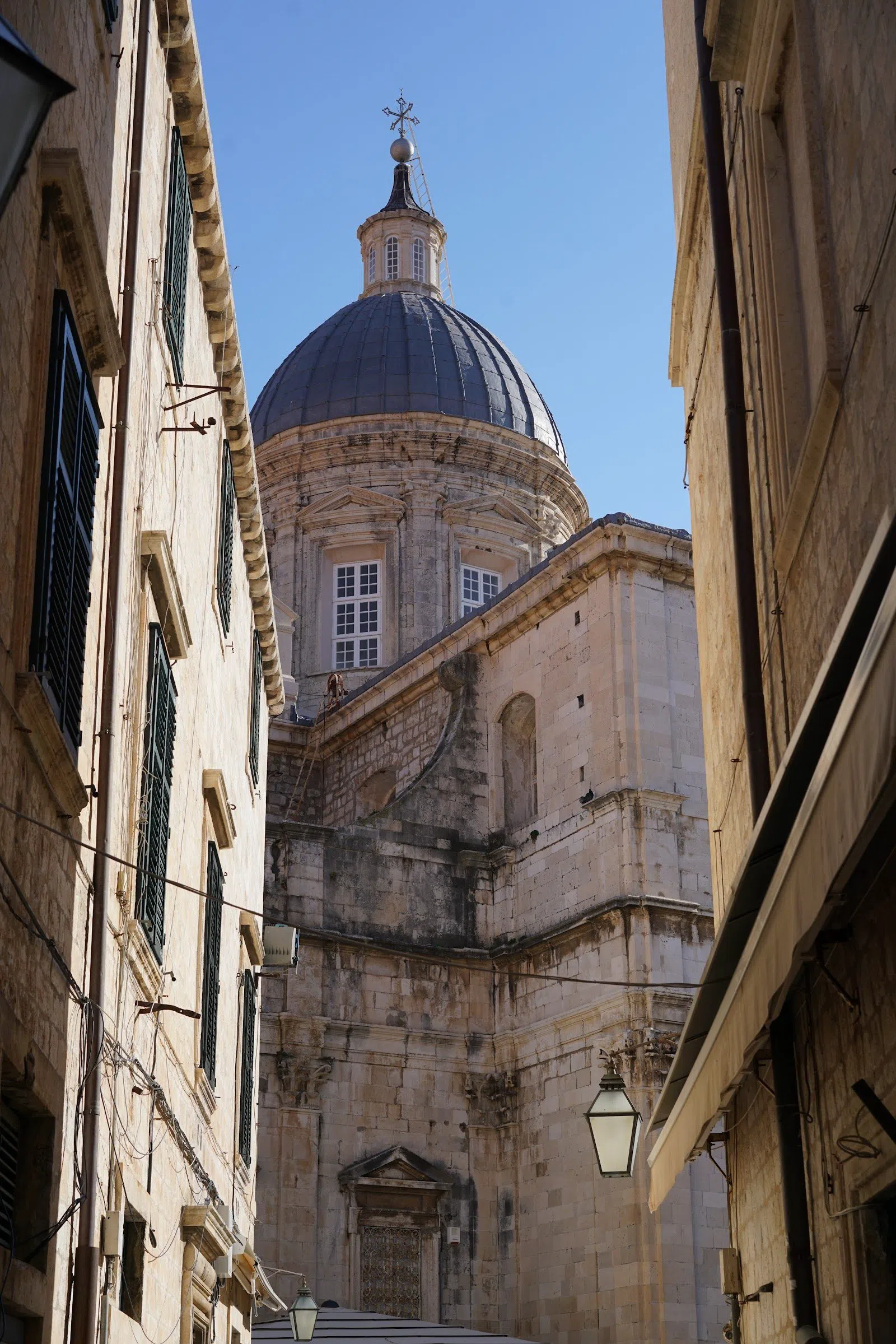
Plan this one carefully. The Treasury is one small room, so guides split parties of fifteen or more into waves and accept that it takes half an hour. Winter hours are shorter than the April to November opening of 9 to 17, and it shuts during Sunday Mass. On 3 February the reliquaries are out in the street where you want them to be, so visit on the 2nd or the 4th to see them at rest and read the workmanship properly.
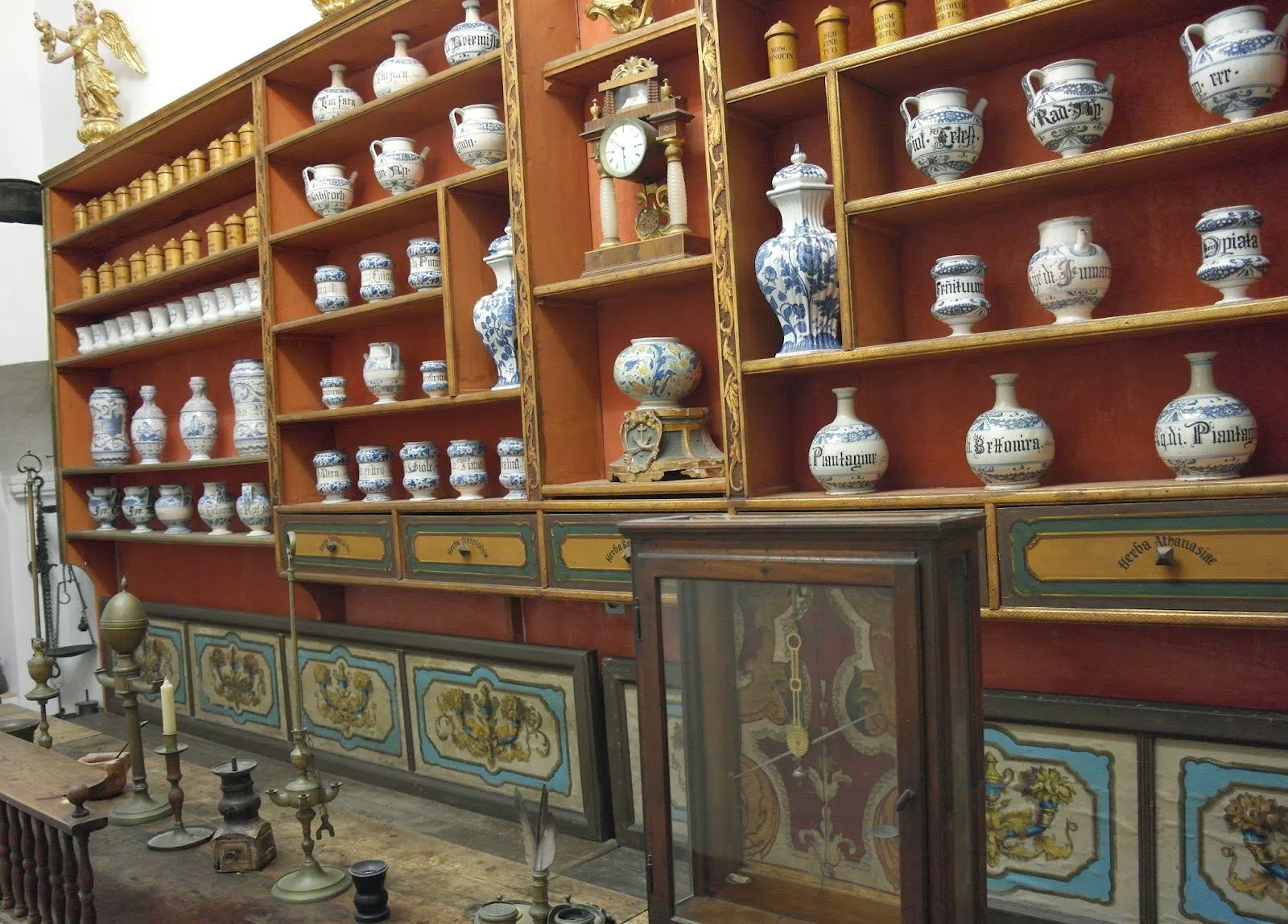
A short walk west along the Stradun, the Franciscan Monastery of the Friars Minor and its Old Pharmacy (Stradun, at the Pile end) is one of the oldest continuously operating pharmacies in Europe, founded in 1317 and still dispensing. Entry is €10. The Mala braća friars are named in the 2026 Festa programme, which is the point of coming: this is a working institution with an unbroken line back to the medieval city, not a museum reconstruction of one. Winter hours are short, roughly 9 to 14, so make it a morning. The cloister walk is narrow, and guides keep parties to one side and do the talking in the garden.
The Republic's half of the feast
Rector's Palace (Pred Dvorom, a minute from the cathedral) is the civic half of the story and the piece most visitors miss. St Blaise was a state cult in Dubrovnik: his face was on the coinage, his name was on the treaties, and the Rector himself led the procession. This is where that Rector lived, for the one month his term lasted, under a door motto instructing him to forget his private affairs and attend to the public ones. Entry is €15, winter hours are 9 to 16, closed Mondays. Coach groups are routine here and guided parties are standard practice, so it is one of the easier bookings of the trip.

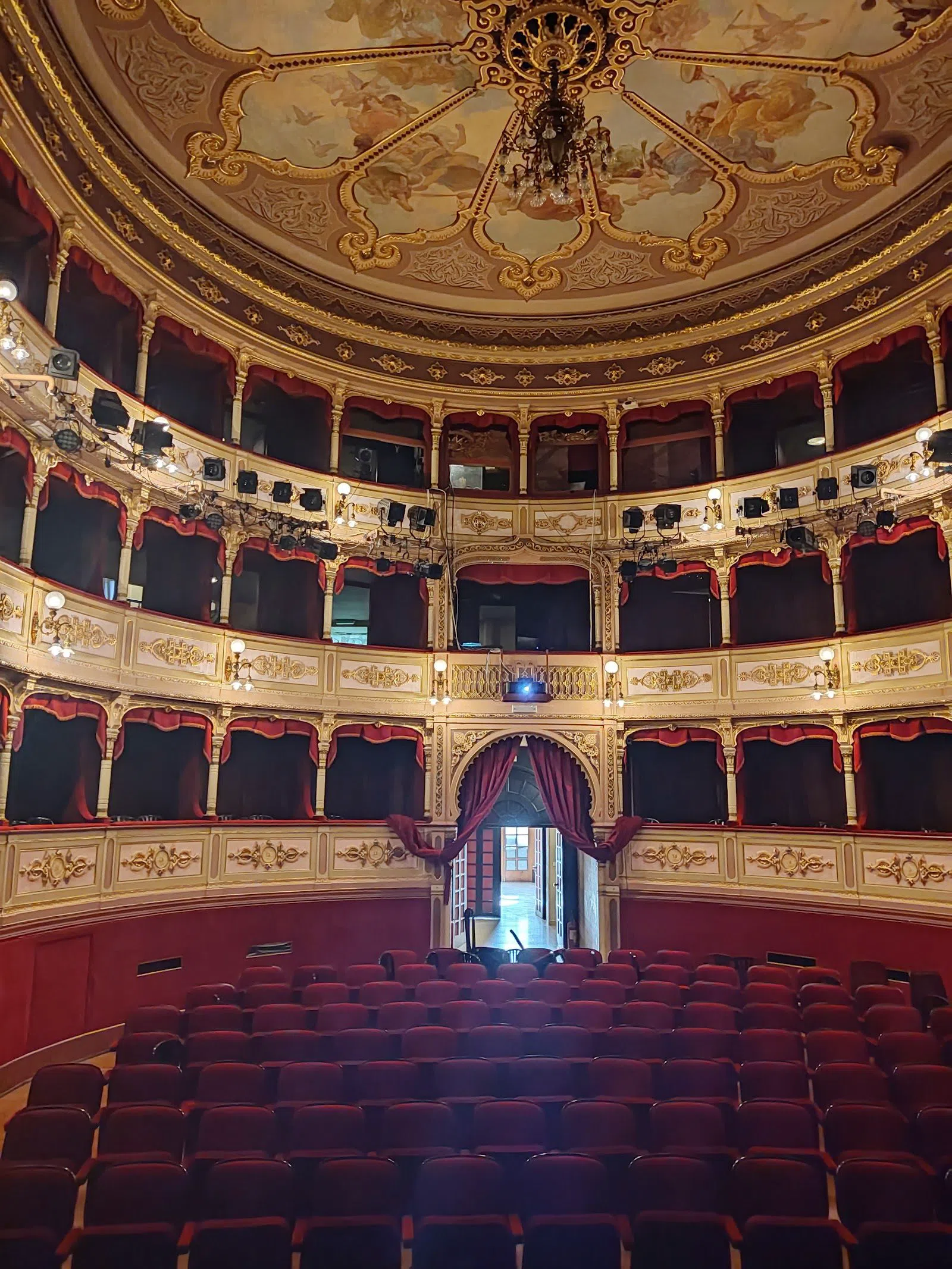
Fifty metres away, the Marin Držić Theatre (Pred Dvorom) stands on the site of the Republic's old Town Council chamber, so the civic thread runs literally under the stalls. It is the main indoor venue during Festa week, and a small house: group bookings are possible but must be made well in advance, and the repertoire is largely in Croatian, so check what is on before you commit a party that does not speak it.
Reading the costumes before you see them on the street

The procession is a parade of regional dress, and most visitors photograph it without knowing what any of it means. Ethnographic Museum Rupe (Od Domina, in the quiet upper Old Town) fixes that. It is a sixteenth-century grain store, and its folk costume collection puts nineteenth-century Konavle dress at arm's length: the red and gold embroidery, the silk from the Konavle valley's own silkworms, the headwear that tells you a woman's marital status. Tickets run about €6.50, or €17 for the multi-museum Dubrovnik Museums pass that also covers the Rector's Palace. The stone-vaulted floors are generous for a group; the granary stairs are steep and there is no lift.
One scheduling trap: Rupe is closed on Tuesdays, and 3 February 2026 falls on a Tuesday. Put it on the 2nd or the 4th.

The living version is Folklore Ensemble Linđo (based at Lazareti, in Ploče just outside the eastern gate). Founded in 1964, it now has around 300 members from the age of twelve upward and 24 choreographies drawn from across Croatia, and it keeps the costume-and-lijerica tradition in working order rather than in a case. Their ticketed Lazareti season, €25 a head, runs summer into September, so in February you catch them at civic events instead, free, as part of the wider Festa programme. Lazareti seats a full coach party and the ensemble takes private and corporate bookings, which is worth knowing if you are building a February incentive trip around the feast.
The walls in the one month they are empty
Walk the Dubrovnik City Walls (entrances at Pile, Ploče and the Maritime Museum) while you have them to yourself. Winter is genuinely uncrowded, and the one-way circuit absorbs large groups without the summer bottlenecks. The ticket is €15 for adults from November to February, €5 for under-18s, with Fort Lovrijenac included for three days. Winter hours are roughly 9 to 15, and at that latitude in February the light goes early, so start at opening.
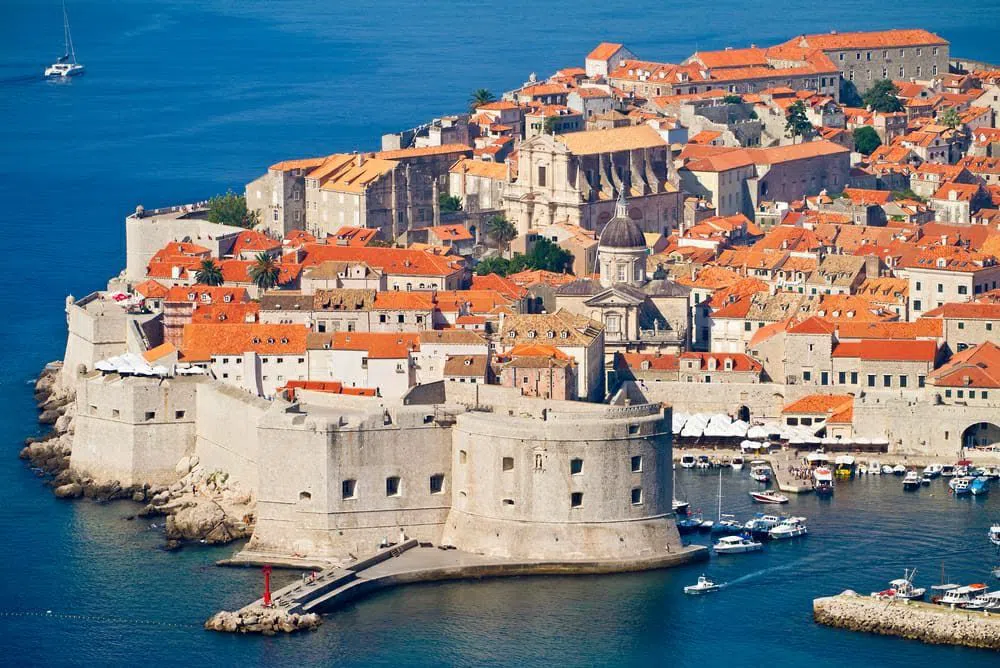
Yes, this is where they filmed the King's Landing exteriors, and you will be told so approximately nine times. The older and better game is counting the St Blaise reliefs. The Republic put him over every gate and every tower, dozens of them, in stone of different centuries, as a signature of ownership, the way a state stamps a seal. Once you start seeing them the circuit stops being a viewing platform and turns into the same argument repeated all the way round: this city belongs to him, and therefore to nobody else.
Evenings in a shuttered season
February nights are the reason to check the concert calendar. The Dubrovnik Symphony Orchestra is the city's year-round musical institution, tickets roughly €10 to €25, and their masked concert lands on 13 February 2026 at the Marin Držić Theatre, ten days after the feast, so it only helps if you are staying on or timing a second trip. They also run the Dubrovnik Musical Spring festival later in the year. The hall is small: parties of twenty or more need to book early or not at all.

Eating in feast week
This is where February bites. A large share of Old Town kitchens close for the season, and the ones that stay open run reduced hours.

Fish Restaurant Proto (Široka ulica, Old Town) has traded on the same corner since 1886, is Michelin Guide-listed, and is one of the few Old Town kitchens genuinely open in feast week: in November, December and February it runs 16:00 to 23:00, last seating 21:00, Monday to Saturday. It closes Sundays, but 3 February 2026 is a Tuesday, so feast day itself is fine. Two floors handle group bookings; in winter, confirm by phone rather than trusting a form. Reckon on €€€.

Restaurant Nautika (Pile, below Fort Lovrijenac) is the city's default special-occasion table, in the 2026 Michelin Guide, open daily 18:00 to 24:00 right through the winter when much of the Old Town has gone dark. It is dinner only, so treat it as the evening bookend to feast day rather than a lunch plan. Tasting menus sit at the top of the Dubrovnik range (€€€€), and it takes private parties and large tables through its reservations system, which is essential in feast week.
For the gap after the morning procession, when the fine-diners are all shut until six, Pantarul (Lapad, a short bus ride west of the walls) is the answer. Michelin Bib Gourmand, €€, named after the Dubrovnik dialect word for 'fork', with a menu that changes weekly off nearby farms. It is open daily 12:00 to 23:00, which almost nothing in the Old Town is. Tables of one to six book online; seven or more by email.

If you are feeding a group properly, Restaurant Kopun (Poljana Ruđera Boškovića, Old Town) has the best room in the city for this week: a 90-seat terrace and a 45-seat indoor hall bookable for private functions all year, on the prettiest small square in Dubrovnik. It is named for the capon, the historic local dish it revived from Republic-era recipes, and it is €€ to €€€. The warning matters more than the menu: from November to February it may run half hours, so a group must contact them well ahead rather than turning up hopefully at one o'clock.

Practical notes
Getting around. The Old Town is entirely pedestrian; buses, taxis and the airport shuttle stop outside the walls at Pile and Ploče, and everything in this article is within a fifteen-minute walk of Luža Square except Pantarul and Lazareti, both a short local bus hop. On 2 and 3 February expect road closures and diverted buses around the walls during the procession, so allow an extra half hour either side of any timed booking.
Money. Croatia uses the euro. Cards are accepted everywhere listed here, but carry twenty or thirty euro in coins and small notes for candles, church donations and the odd bakery that has not modernised.
Timing. Museums keep short winter hours (the Franciscan pharmacy roughly 9 to 14, the walls 9 to 15, the Rector's Palace 9 to 16), so a February day realistically holds two paid sights, not four. Do the walls at opening for the empty circuit and the low light. Keep the 3rd for the feast and nothing else; put Rupe and the Treasury on the 2nd or the 4th.
Budget. The Festa itself costs nothing: the banner-raising, the procession, the throat blessing, the musketeers and Linđo's civic appearances are all free. A full day of museums (walls, Rector's Palace, Treasury, Rupe, the Franciscan monastery) comes to around €50, or less with the Dubrovnik Museums pass. Add €25 to €35 a head for a solid dinner at Proto or Kopun, considerably more at Nautika. Winter room rates are the lowest of the year, though feast week is the one February spike, so book early. Start with Dubrovnik hotel search, and for the rest of the city outside these two days, the Dubrovnik guide covers the ground.
Closed days, collected. Rupe closes Tuesdays (so, feast day). The Rector's Palace closes Mondays (so, banner day). Proto closes Sundays. The cathedral Treasury shuts during Sunday Mass, and the Church of St Blaise closes to sightseers whenever Mass is on. Plan around those five lines and the rest of the trip falls into place.
Before you go
When is the Feast of St Blaise in Dubrovnik in 2026?
The main days are Monday 2 February and Tuesday 3 February 2026. The banner of St Blaise is raised on Orlando's Column with a dove release on the 2nd; the procession, the relics and the blessing of throats fall on the 3rd, the saint's feast day itself.
Do I need a ticket for anything on feast day?
No. The banner-raising, the procession, the musketeers, the Church of St Blaise and the throat blessing are all free, with no booking and no door policy. Only the museums are ticketed: the City Walls at €15 in winter, the Rector's Palace at €15, the cathedral Treasury at roughly €3 to €5, Ethnographic Museum Rupe from about €6.50 and the Franciscan monastery at €10.
Can I take the blessing of throats if I am not Catholic?
Yes. Priests give it all day at the Church of St Blaise using two crossed candles held to the neck, and nobody asks about your faith. If you would rather just watch, stand aside and let the queue pass. Photography from the back of the nave is normal, but the church closes to sightseers during Mass, so check the board on the door.
What is actually open in Dubrovnik in early February?
Less than you would like. Museums run short winter hours (the walls roughly 9 to 15, the Rector's Palace 9 to 16, the Franciscan pharmacy about 9 to 14), and many Old Town restaurants close for the season. Proto opens 16:00 to 23:00 Monday to Saturday, Nautika runs daily 18:00 to 24:00, Pantarul in Lapad opens daily from noon, and Kopun may run half hours, so contact it ahead.
Where is the best place to stand for the procession?
Not in the middle of Luža Square, which is the tightest crush in the city on both days. For the musketeers' salute, stand outside the gates. The trombunjeri fire only outside the walls, never within, because the Republic banned gunpowder inside the city. For the banner-raising, arrive at Luža about forty minutes early or watch from the Stradun side.