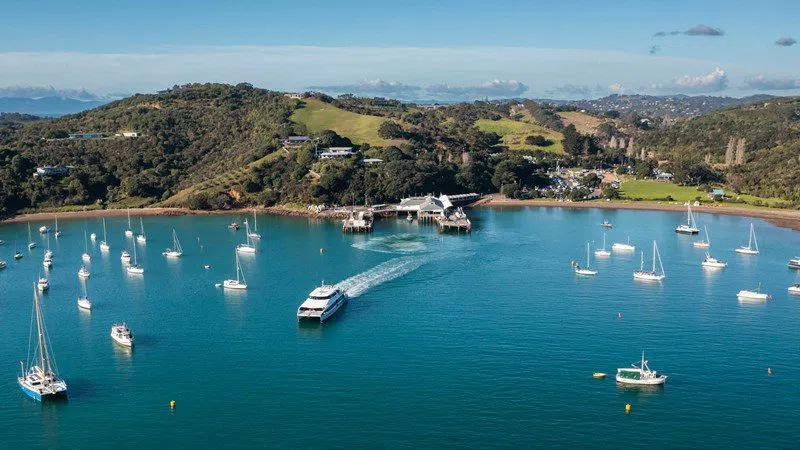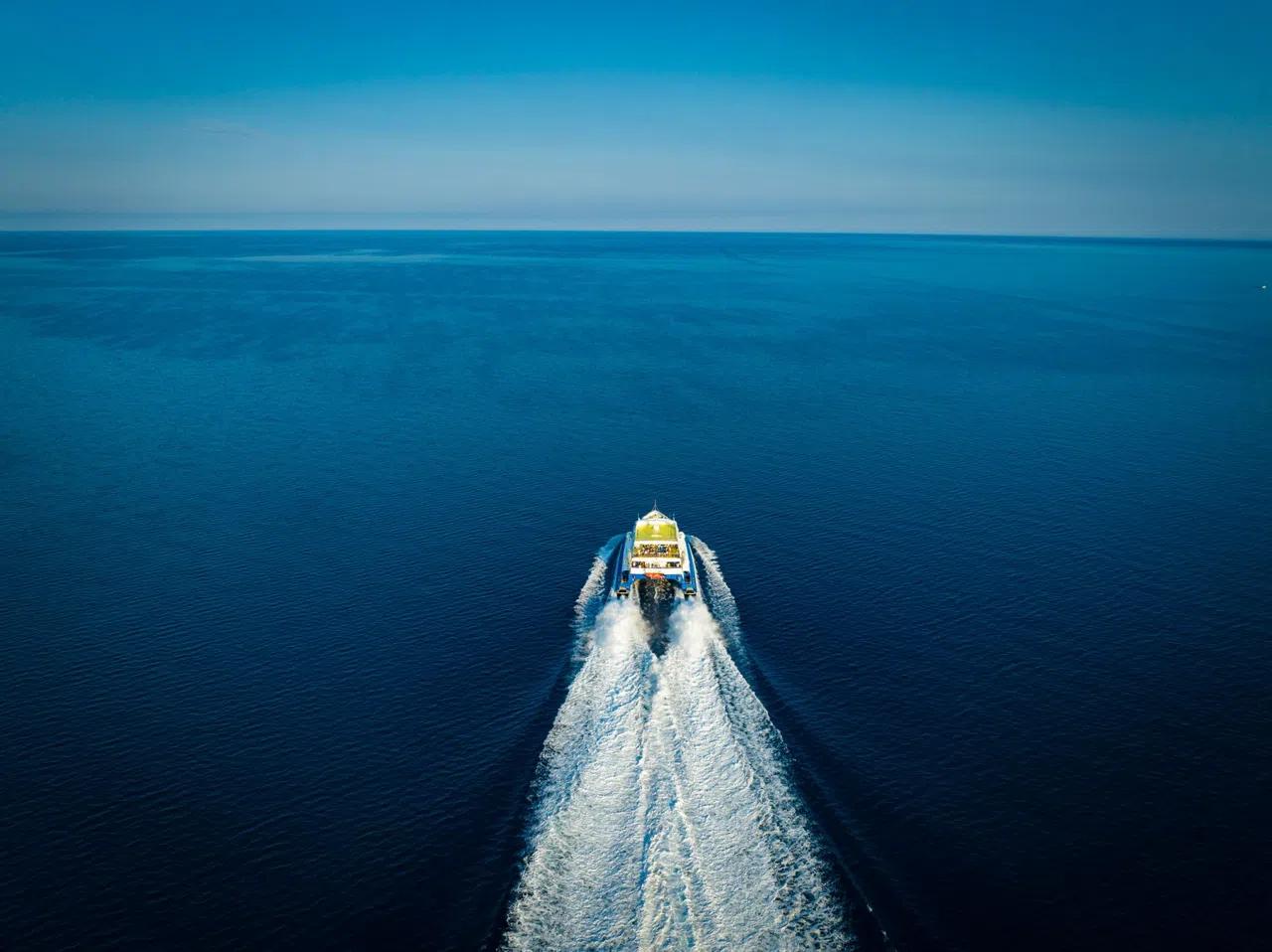

There is a boat that leaves Dubrovnik a handful of mornings a week each summer and takes you somewhere the coach tours can't follow: out through the open Adriatic and into a fjord-shaped bay where a Venetian-era sailors' town sits at anchor under limestone peaks. Three hours by water, and Dubrovnik's stone alleys give way to a harbour most day-trippers only ever glimpse from a minibus window on the E65. Get the sailing days right and this is the best single day out of the city — go by sea, not by road, and you'll understand why within the first half hour.
The Crossing
Kompas Adriatic Lines Ferry (departs Dubrovnik's Gruž port) is the spine of this whole day. It's a seasonal international run — June through September 2026 — and it does not sail daily: expect Monday, Wednesday and Saturday departures, though the exact days shift year to year, so confirm the current week's schedule before you build a day around it. The crossing itself runs about three hours, cutting a straight line across open water into the mouth of the Bay of Kotor, and it beats the alternative land route by a wide margin — the road crossing means a border queue at Debeli Brijeg or Karasovići and two to three hours hugging the bay's edge before you've even reached Kotor. A one-way ticket runs €50–€60. Seats are limited and this is a genuinely popular route for families and small groups in July and August, so if you're travelling with four or more people, get block seating booked in advance — it sells out on peak Saturdays with real regularity, not just in theory.
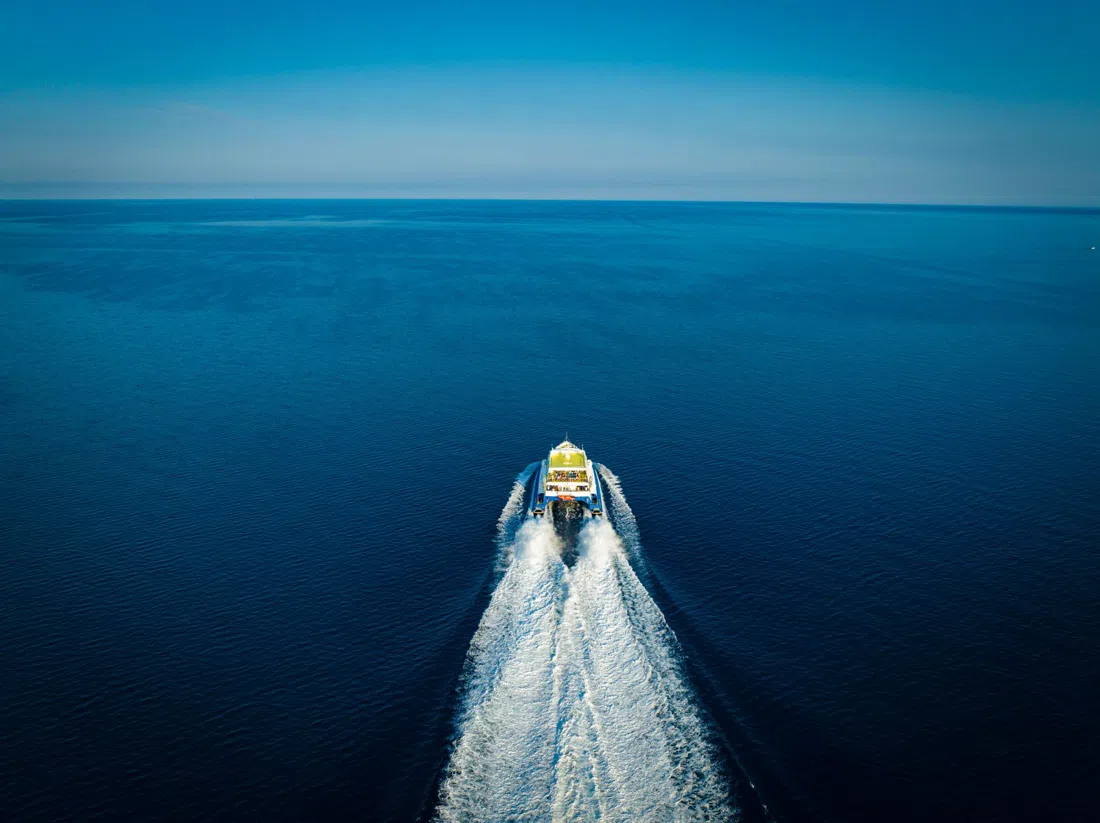
Board early. The forward deck seats go first, and they're worth having: as the boat rounds into the bay proper, the mountains close in on both sides and Kotor's fortress walls climb the hillside above the water, which is a view you want facing forward, not through a cabin window.
Perast: The First Stop in the Bay
The ferry doesn't dock directly at Perast Old Town (on the bay's northern shore, between Risan and Kotor) on every schedule, but most operators build in a stop or a connecting local boat here, and it's worth insisting on if yours doesn't — no coach tour can put you at the foot of these Baroque merchant palaces the way a boat can. It's free and fully open-air, a single waterfront promenade backed by 17th- and 18th-century stone houses built by sea captains who made their money escorting Venetian merchant convoys. The catch is the quay: it's narrow, and by midday in peak season it absorbs both the ferry crowd and every coach-tour bus doing a twenty-minute photo stop from Kotor. Arrive on the early side of the schedule if you can, or plan to enjoy it properly on the walk back down after the bell tower.
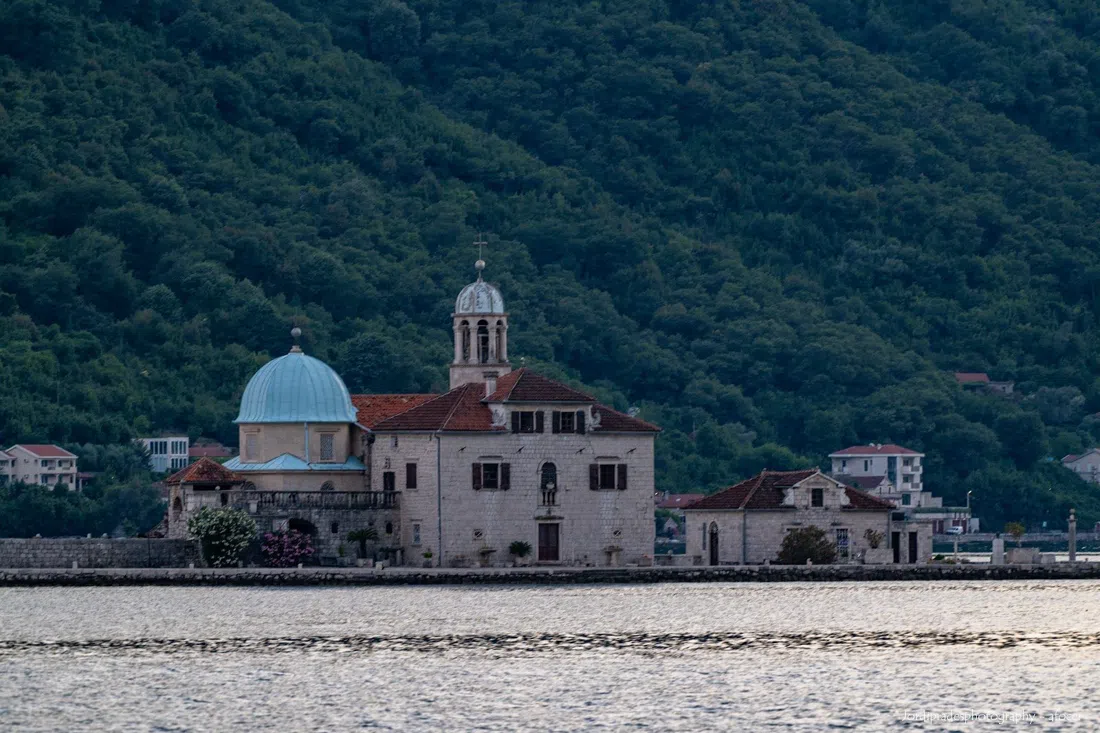
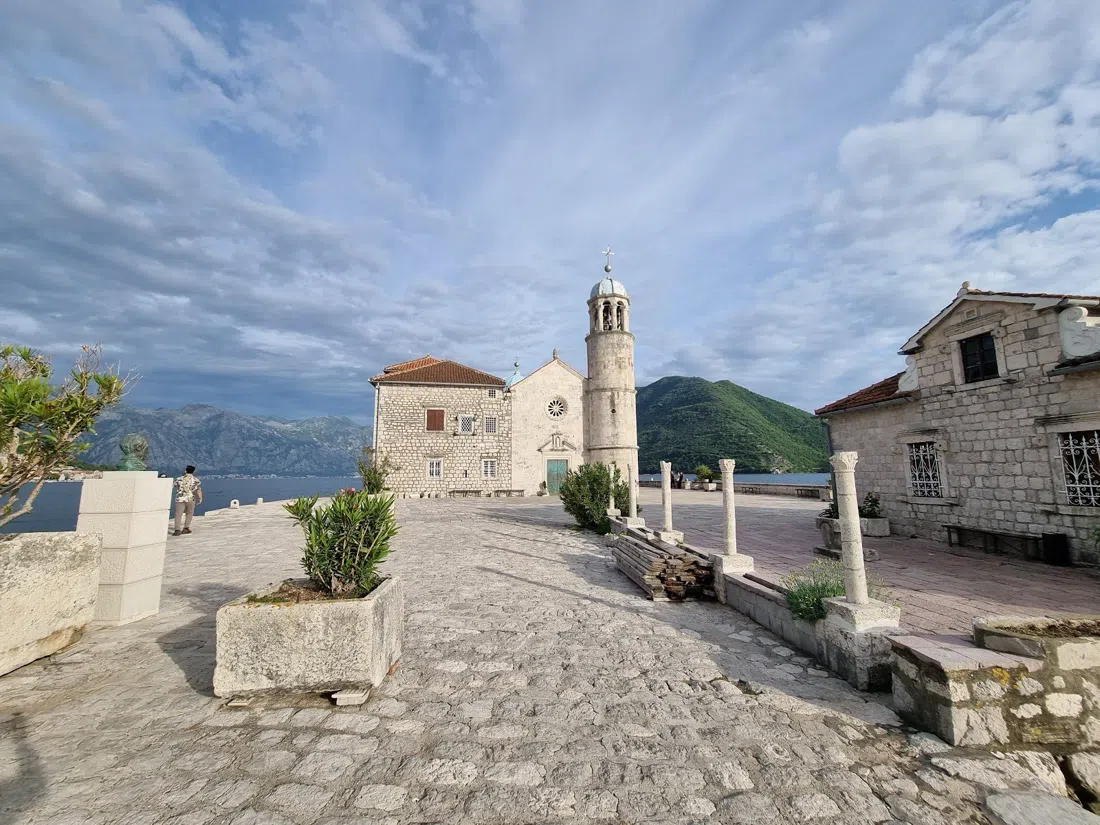
From the quay, small boats to Our Lady of the Rocks, just offshore from Perast, run constantly through the day — this is the one stop on the whole route that's genuinely unreachable any other way. The islet is artificial: for centuries, Perast sailors returning from voyages dropped stone on the same reef as a votive act, then scuttled old ships loaded with rock on top of that, until there was enough land for a church. The chapel and its small museum of votive paintings — mostly ships in storms, donated by captains who survived them — sit on a spit of reclaimed sea, which is a better story than most islands can tell. The shuttle is €5–10 return and the church or museum entry is €1–2. The interior is small, so if a boatload of twenty arrives at once, expect to wait your turn at the door.
Before you leave Perast, climb St. Nicholas' Church & Bell Tower, in the same town — this is the best view on the entire route and the cheapest thing you'll do all day, which is exactly why it's easy for a rushed itinerary to skip it. Cash only, €1, and the stair is genuinely narrow — fine for two or three people moving through at a time, hopeless for a full coach group trying to summit together, so if you arrive behind a tour bus, let them clear the tower first rather than queuing on the stairs. From the top you get the whole bay laid out — Kotor's walls climbing the mountain behind you, Our Lady of the Rocks sitting in the water below, and the fjord narrowing away toward the Adriatic the way you came in.
Kotor Old Town, on Foot
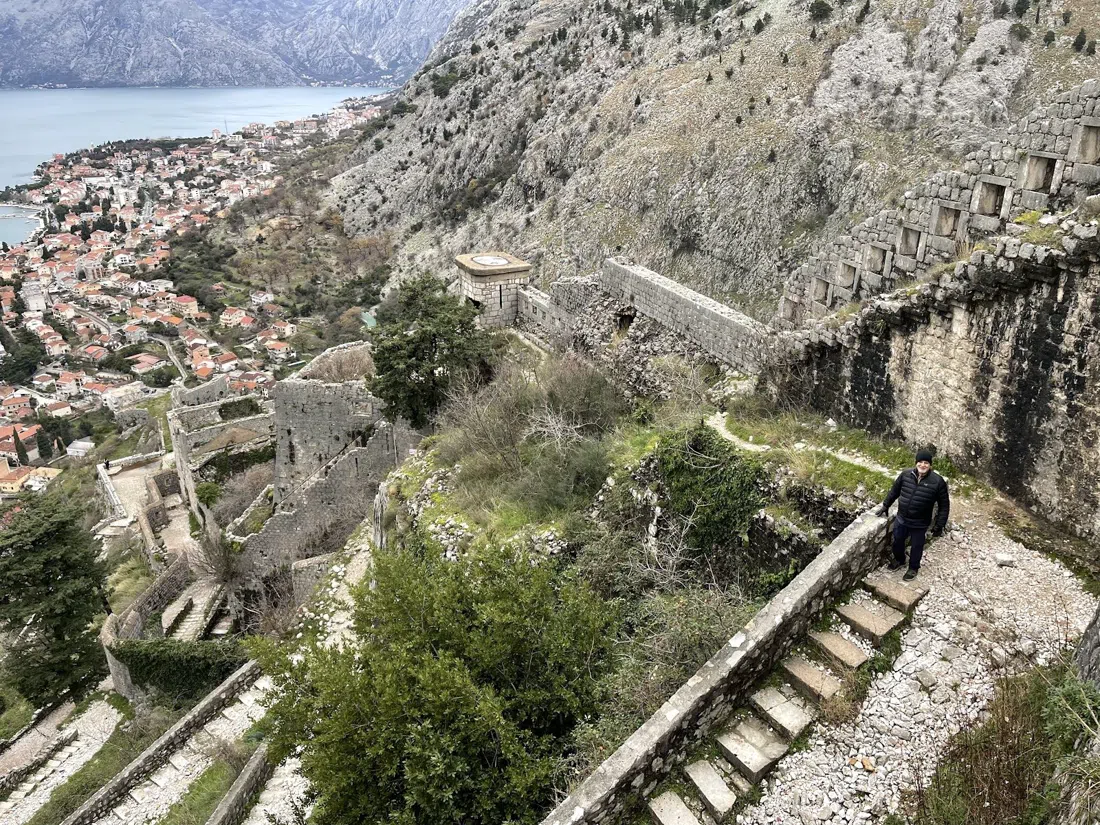
Back on the water and into Kotor proper, the day's centrepiece is the climb up Kotor Old Town City Walls & St. John's Fortress, entered from inside the old town walls. This is the money shot of the trip — 1,350 steps of medieval fortification zigzagging up the cliff face to a fort with the whole bay spread out below — and it's worth doing before midday if you're here in summer, because there's no shade on the climb and the stone holds heat hard by early afternoon. Official paid entry is €8 and the climb takes 45–60 minutes at a reasonable pace; the gate handles groups without much friction. One thing worth flagging plainly: the free "Ladder of Kotor" route, the old back-way up used by budget travellers for years, has been sealed off by the municipality as of 2026. Don't route yourself or a group toward it expecting an alternative — the paid gate is now the only way up.
Down in the old town's main square, the Cathedral of Saint Tryphon is the anchor landmark and, fairly, every land tour hits it too — it earns the visit regardless. Entry to the cathedral itself is free; the museum and bell-tower balcony run around €4, cash only, and that cash-only fee is the actual bottleneck on a busy day, not the cathedral itself — a queue of card-only tourists patting their pockets at the door is a common sight by mid-morning, so sort your euros before you're at the front of the line.
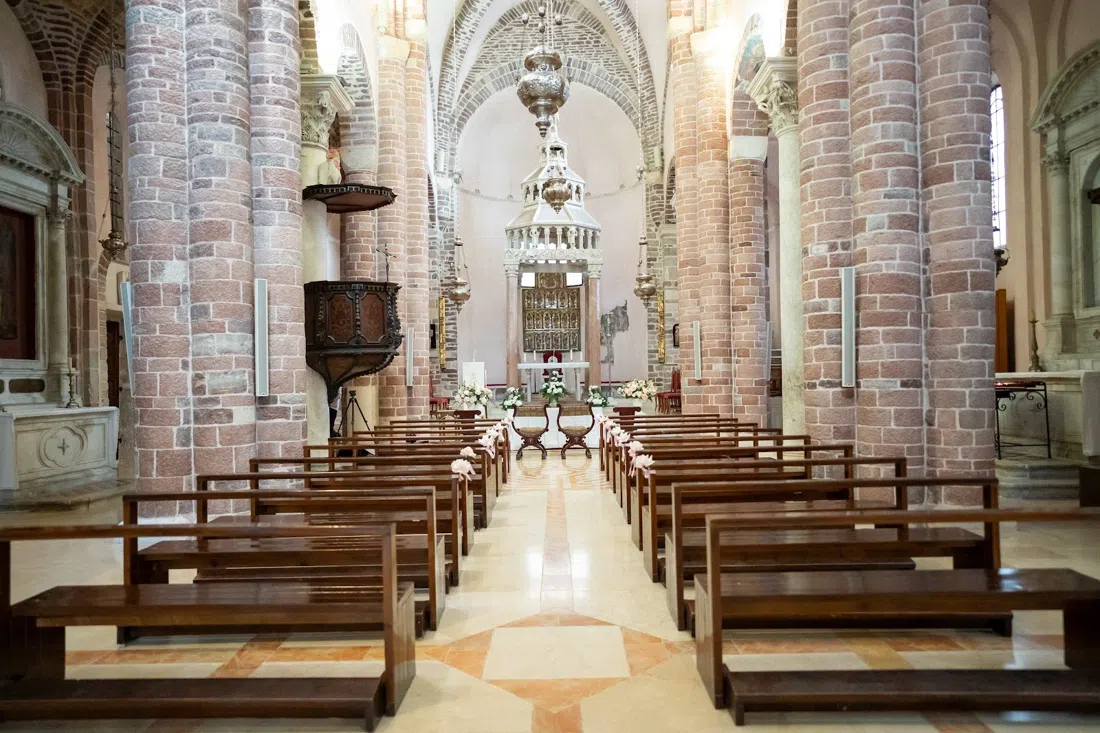
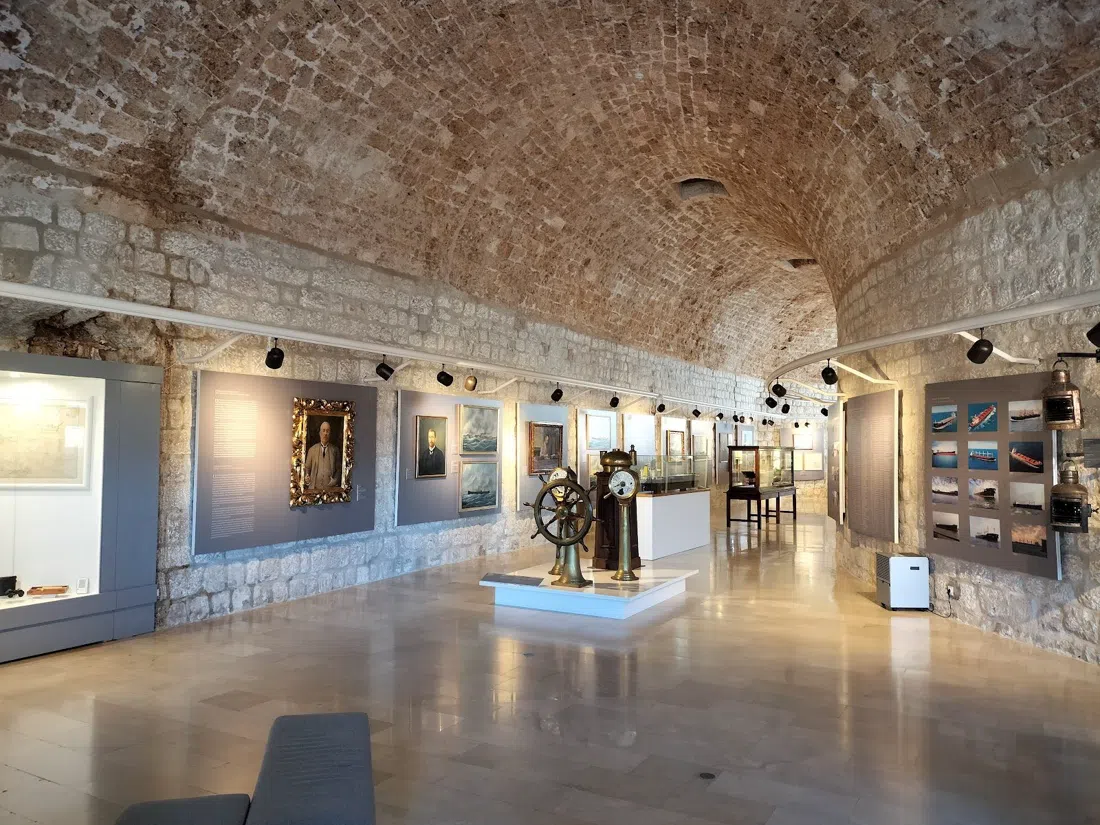
For an angle that actually earns its place on a ferry-day itinerary, the Maritime Museum of Montenegro, a few minutes' walk from the cathedral, is worth the detour. Kotor's whole old identity is a sailors' guild town — captains, shipowners, naval officers who served everyone from Venice to Austria-Hungary — and that's precisely the thread running under this whole crossing. €5 including an audio guide, and it takes groups without difficulty.
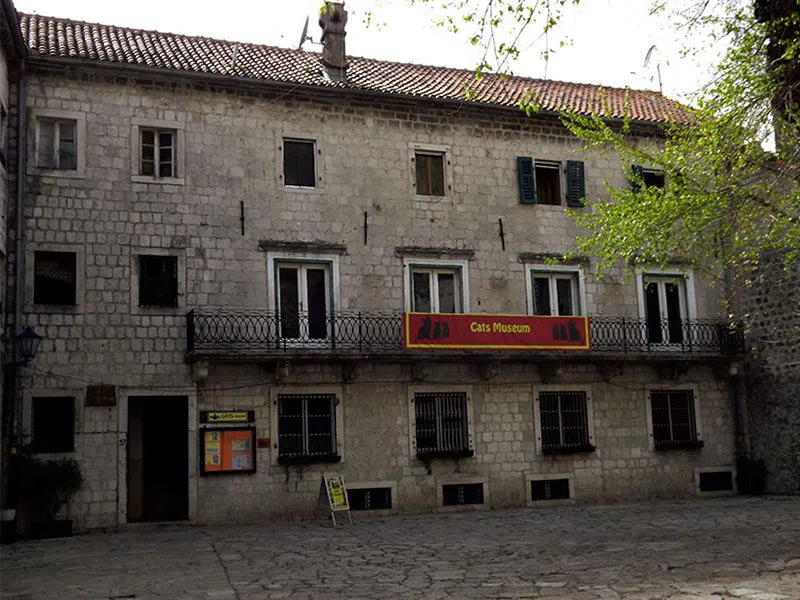
If you've got ten spare minutes and want something lighter between the heavier stops, the Cats Museum of Kotor, tucked into the old town's lanes, is a genuinely tiny room of cat-themed prints, postcards and ephemera — €1, and it's fine for a couple or a small family, but there's no version of a twenty-person coach group fitting through it at once. Treat it as a five-minute palate cleanser, not a headline stop.
Further Into the Bay, If You Have the Hours
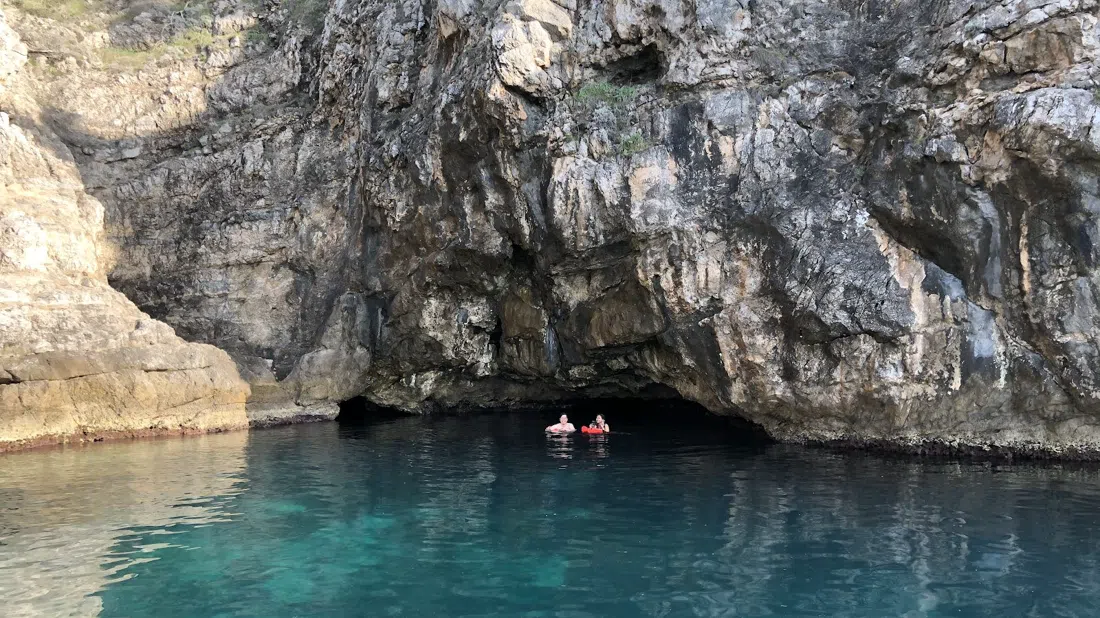
The ferry's fixed return sailing is the honest constraint on this whole day, and it rules out the bay's furthest stop for most itineraries — worth saying plainly rather than pretending otherwise. The Blue Cave (Plava Špilja) sits 45–60 minutes further out by speedboat from Kotor, a sea cave where the light off the seabed turns the water an almost unnatural cobalt blue, and it's swim-friendly if you go prepared. It's small-boat access only, capped at whatever the boat holds — typically 12 to 15 people — so it's never a mass-tourism stop by nature. Shared speedboat tours run from around €25–40 per person; a private charter starts around €240 for the boat. If your ferry's return sailing gives you a long land window — an early-morning crossing with an evening return, say — this is worth the extra hours. If you're on a tighter round trip, it's the first thing to cut.
Golden Wave Speedboat Tours, based in Kotor, is the operator worth naming if you want to string the Blue Cave, Our Lady of the Rocks and the open bay together by water rather than doubling back on foot — they run both shared group departures and private charters, so it scales from a couple to a small group without much trouble.
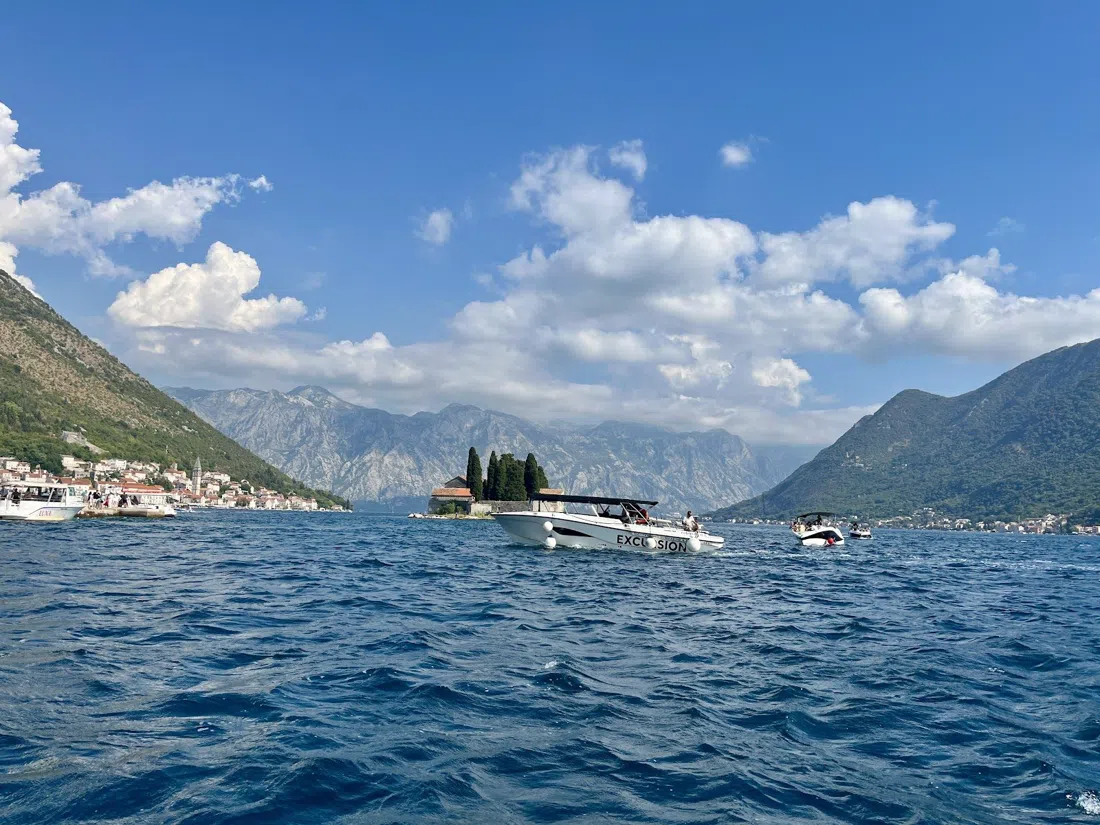
One landmark you'll sail past rather than visit: at the mouth of the bay sits Mamula Island by Banyan Tree, a 19th-century Austro-Hungarian fortress island that reopened its full first season as a resort in 2026. It's a genuinely striking thing to see from the water — a perfect circular fort ringed by turquoise shallows — but it is now a 32-room private resort, not a public attraction, and there's no walk-in access; you'd need a hotel booking or a restaurant or spa reservation just to set foot on the dock, and rooms start well north of €500 a night. Point it out to your group as you pass. Don't promise anyone a stop there.
Where to Eat Before the Return Sailing
Lunch timing on a ferry day is dictated by the return sailing, so plan it deliberately rather than drifting into whatever's nearest when hunger hits. For something with real character, Luka's Oyster Farm, on the water outside Kotor's old town, is the freshest and most photogenic option on the whole bay — a small, family-run operation shucking oysters to order at €1–1.50 each, with simple mains around €10–15. The catch, and it's a real one: there are very few tables. This is a stop for a couple or a small group of up to about eight, not something you can promise a full coach party without calling ahead days in advance to arrange it specially.
For a proper sit-down inside Kotor itself, Restaurant Galion, on the old town waterfront, is the closest thing on this route to a Michelin-adjacent choice — 70 seats spread across three areas, comfortable with group bookings, mains running €20–35. It suits a day trip with a longer land window before the return sailing, less a rushed hour between the fortress climb and the dock.
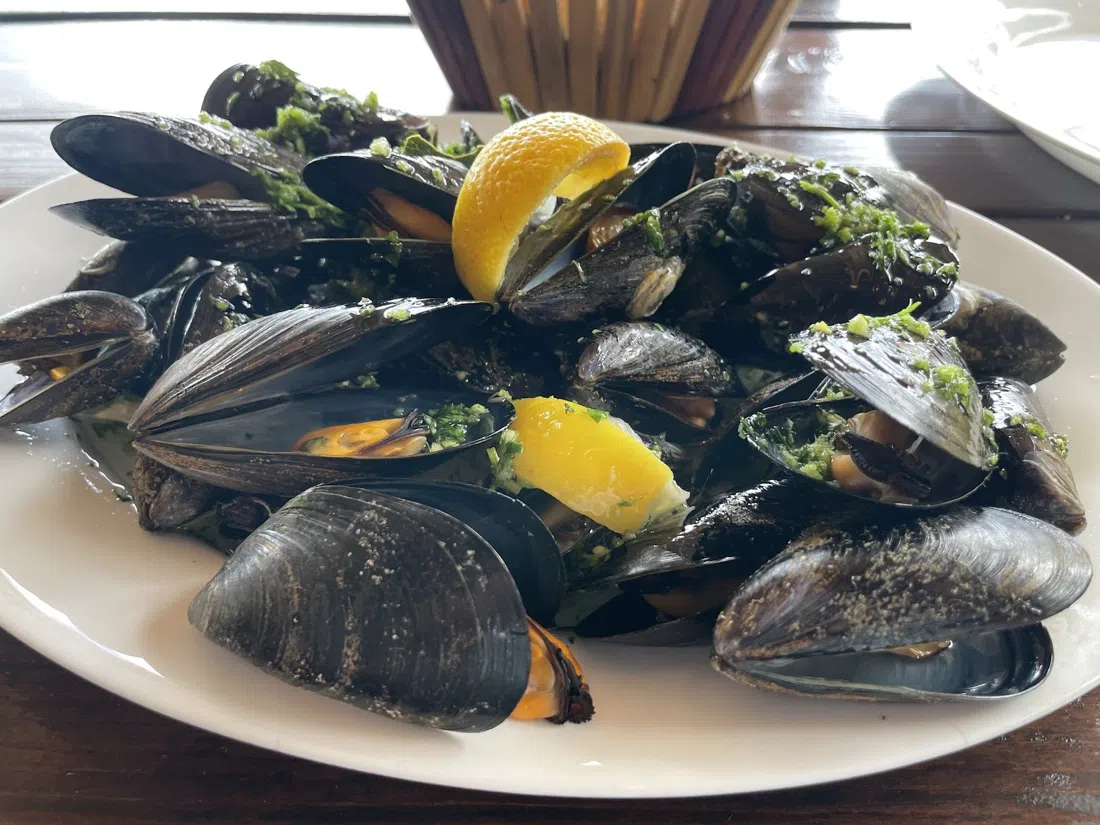
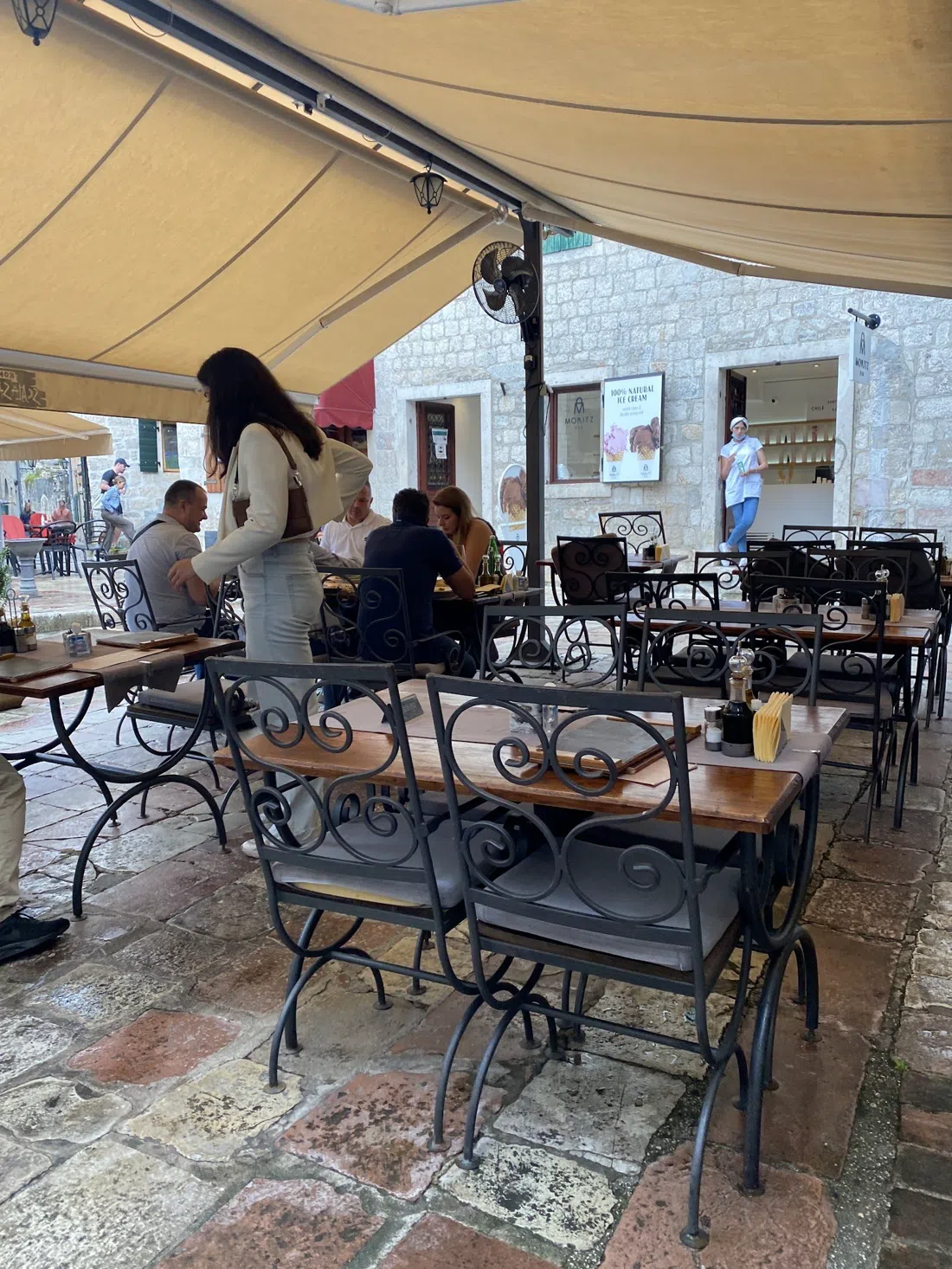
The better-value, more local counterpoint is Konoba Scala Santa, also in the old town — 40 seats inside, 42 more outside, and genuinely built to handle groups if you contact them ahead. Expect buzara-style mussels, grilled fish and the kind of unfussy Montenegrin cooking that costs half of Galion for a similar quality of ingredient — mains €10–20. If you're trying to get a group fed and back to the ferry without ceremony, this is the one to book.
The Practical Bit
Getting there: the ferry departs from Dubrovnik's Gruž port; check the current week's sailing days before you plan around it, since the seasonal Monday/Wednesday/Saturday pattern can shift. Book ahead for July and August, and book block seating specifically if you're a group of four or more — this route sells out on its own popularity, not hype.
Cash: carry euros. Montenegro runs on the euro, which keeps the currency math simple, but several of the day's best stops — the St. Nicholas bell tower climb, the cathedral museum, the oyster farm — are cash-only or cash-preferred, and a card reader is not a given at any of them.
Timing: aim to be off the boat and into the fortress climb before midday if you're travelling in summer — there's no shade on the walls and the stone gets brutal by early afternoon. Perast is calmer in the first hour of the day, before the coach tours arrive; the bell tower and quay are worth prioritising early rather than saving for the walk back.
Budget: figure on roughly €70–100 per person for a full day if you do the ferry, the Perast stops, the fortress climb, the cathedral museum and a mid-range lunch — closer to €150+ if you add a Blue Cave speedboat run. It is not a budget day, but it is a day nothing on land can replicate.
If you're basing the trip out of Dubrovnik itself, sort accommodation well before the ferry's peak-season dates lock up — start with a Dubrovnik hotel search — and for everything else worth doing in the city on either side of this crossing, the full Dubrovnik guide covers it.