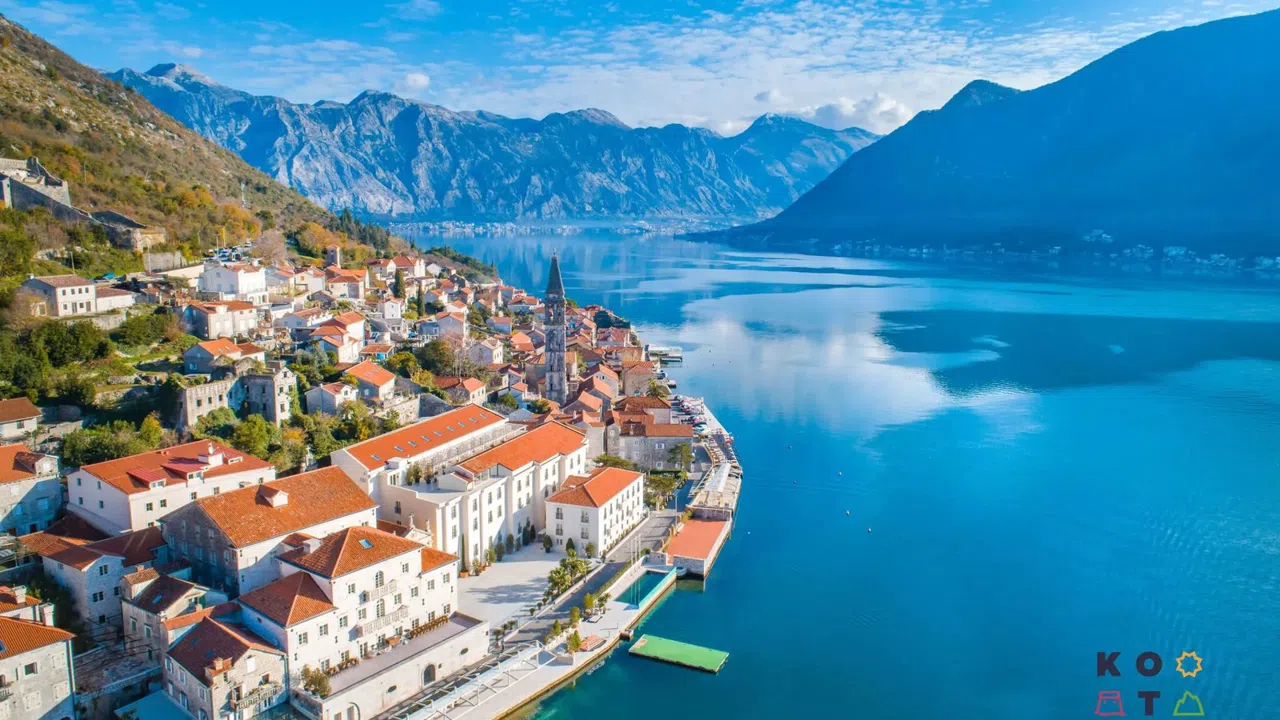

You leave Dubrovnik while the Old Town is still being swept, and for the first hour the drive is unremarkable. Then the road tips down into the Bay of Kotor, the water turns the colour of wet slate, and a walled town of roughly 5,000 residents appears at the end of an inlet that looks like a fjord and isn't one. It is a drowned river canyon. Whether the rest of the day works comes down almost entirely to what hour you arrive and which direction you go first.
What a full day over the border actually covers
Nine to ten hours door to door is the honest shape of this trip. Allow two to two and a half hours each way between Dubrovnik and the bay, border queue included, and you are left with five or six hours of actual Montenegro.
That budget splits into two halves. The first is the bay itself: the walled town of Kotor, the waterfront village of Perast and the small island church offshore. The second is a fork. Either turn uphill out of Kotor onto the old road towards Lovćen and the former royal capital at Cetinje, or stay at sea level and run south to Budva. Attempting the bay, the mountain and the coast in one day leaves you with a minibus ride punctuated by car parks. Pick one fork and you get a day out.
Kotor and the hour you arrive
Kotor Old Town (Stari Grad, Kotor) is the anchor of every version of this day and also its single biggest risk. There is no ticket and no door policy. The lanes are public streets, free to enter and walk at any hour. The problem is arithmetic. Between roughly 10:00 and 15:00, cruise arrivals can put several thousand people inside a town of about 5,000 residents, and the lanes are too narrow to absorb them. Licensed guides routinely walk parties of 20 to 40 in from the Sea Gate, and the better ones split a full coach into two groups, because a block of forty people cannot stand together in a Kotor alley without blocking it.
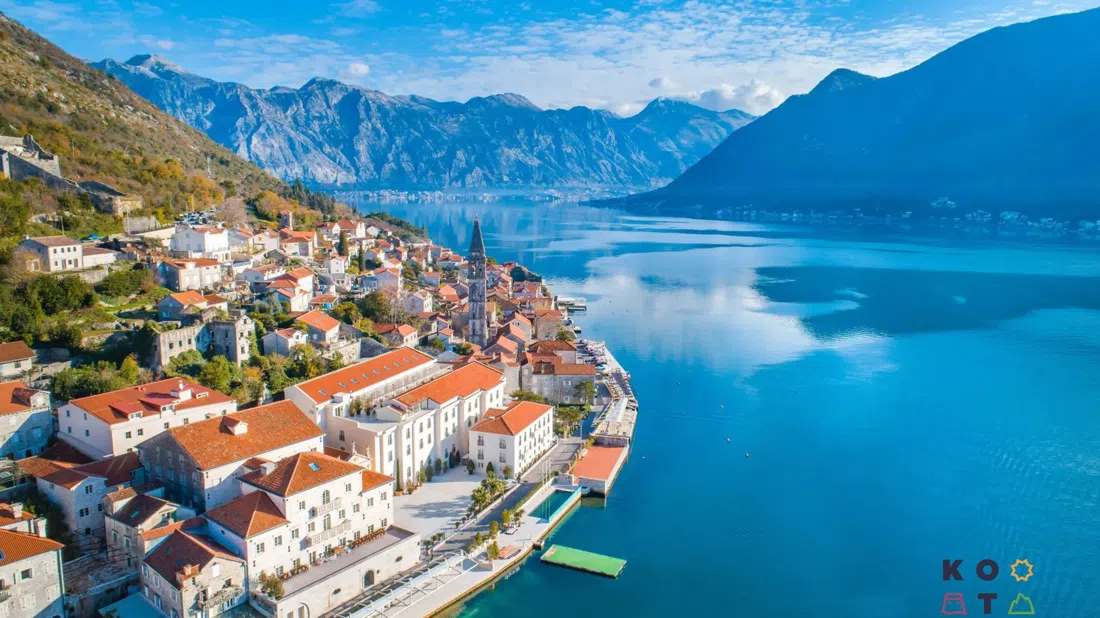
An early or late slot is the whole trick. If your day starts in the dark, you will have the main square almost to yourself and can be out again before the ships empty.
Inside the walls, the Cathedral of Saint Tryphon (Katedrala svetog Tripuna, Stari Grad) is the stop that earns this trip its culture label: a Romanesque church with a treasury and balcony upstairs, around €4 cash including both. It is cash only, prices rise in peak season, and it closes to visitors during services, when entry is free but sightseeing is not the point. The treasury staircase is tight, so guides send groups up in waves, and shoulders and knees must be covered. Ask your guide to sequence it first; nothing else in Kotor is as easy to lose to a badly timed Mass.

The Maritime Museum of Montenegro (Stari Grad, Kotor) is the one venue on the whole route that actively wants groups: €5 adult, €1 for students and children, and €2 a head for parties over ten, audio guide included, with out-of-hours visits arranged by phone for groups of ten or more. Its hours are what catch tours out: 09:00 to 18:00 on summer weekdays, 09:00 to 15:00 from October, and only 09:00 to 13:00 at weekends and on holidays. A Sunday-afternoon arrival finds it shut.
The climb to the Kotor City Walls and St John's Fortress (San Giovanni, directly above Stari Grad) costs about €15 adult at the gate, cash or card, under-12s free. There is no group rate and no pre-booking, so everyone queues at the same two Old Town gates, which is why guides hand this over as free time rather than leading it. The full return climb is a two to three hour commitment. On a single day from Dubrovnik most people do the first 20 to 30 minutes as far as the Church of Our Lady of Remedy, which already delivers the view you came for.
Perast and the island church offshore
Perast old town waterfront (Perast, inner bay) is quieter, prettier and considerably more civilised than Kotor, partly because cars and coaches are banned from the waterfront. Vehicles stop above the village and everyone walks in, which is why Perast visits get timed at 45 to 90 minutes. Walking it is free; roadside coach parking above the village is not. Perast has no ticket gate at all, so if Kotor is swamped on a ship day, a competent guide reverses the running order and brings you here first.
From the quay, local boatmen run continuous shuttles to Our Lady of the Rocks (Gospa od Škrpjela, offshore from Perast), from about €5 per person for a five-minute crossing, plus €2 to €3 cash for the church museum. It is the best-value ticket in the country and the image that sells the entire day trip: a man-made islet, built up over centuries around a reef, carrying a single church. Boatmen will move a whole group in two or three loads, and because the islet is tiny, large parties are asked to rotate through the church rather than pile in together. Two warnings. It is cash only. And it closes at 17:00 in April, May, September and October, 18:00 in June, 19:00 in July and August, so a tour running late arrives at a locked door with a perfect view of it.
For the shot that shows both islands at once, climb the St Nicholas Church bell tower (Perast waterfront), €1 to €2 cash at the base or around €3 for a combined church and tower ticket. The stair is single-file, so it takes individuals and small parties only; a coach cannot go up as one body. If you have under an hour in Perast, skip it. The climb plus the wait on the stair eats twenty minutes you would rather spend on the water.
The Perast Museum (Bujović Palace, Perast waterfront) holds over 2,000 objects explaining why a village of 400 people once had its own navy, which is the real history underneath the postcards. Entry is €8 adult, €5 for children under 12, €5 a head for groups of ten or more, and a €15 pass covers five Kotor municipal museums if you are museum-minded. It closes on Mondays and runs 10:00 to 16:00 from 15 October, precisely the window autumn day trips arrive in. The loggia and stair are narrow and staff prefer groups in halves.
Lunch in the inner bay
Konoba Ćatovića Mlini (Morinj, inner bay) is the lunch that turns a private day into a day out rather than a transfer with stops: a former mill complex with streamside tables, run by the same family since 1994, open daily 12:00 to 22:30. Reckon on roughly €40 to €70 a head for a full seafood lunch, which is mid-to-high for Montenegro and still cheaper than the equivalent in Dubrovnik. It takes group bookings and is a standing stop for private tours, but reservations are essential in season if you want the tables by the water rather than the room behind them.
The old road up to Lovćen and Cetinje
This is the fork I would take. The Kotor Serpentine (Ladder of Cattaro, the old Kotor–Njeguši road) is the defining stretch of the whole trip: about 18km and 35 to 40 minutes from Kotor up to Njeguši, with marked pull-ins so you actually stand at the edge rather than photograph through glass. It is free, with park fees applying higher up. Cars and minibuses handle the bends; full-size coaches cannot, which is the strongest practical argument for the private format rather than a big group departure.

At the top, Kafana Kod Pera na Bukovicu (Njeguši) has been open since 1881, in the village where Petar II Petrović-Njegoš (prince-bishop, poet, and the reason the mountain above matters) was born. A tasting plate of pršut, Njeguši cheese and olives runs about €15 to €20. It is genuinely built for groups: roughly 220 seats across the terraces plus about 30 inside, open daily from early morning until around 21:00.
The Njegoš Mausoleum (Lovćen National Park) is the high point of the day in both senses, and the only stop I would describe as conditional. Entry is €8 adult, €4 for ages 7 to 18, plus €4 per person Lovćen park entry and €2 parking, open 09:00 to 17:00 April to November and 09:00 to 16:00 in winter. Groups are taken, agencies holding a signed agreement with the National Museum get a discount, and organised visits can be arranged on +382 69 349 302. But cloud or snow closes the summit outright, so treat it as weather-dependent rather than booked.
Down the far side, Cetinje Monastery (Cetinjski manastir, Cetinje) is free and still a working monastery, receiving visitors roughly 08:00 to 18:30 while pausing for services. Shoulders and knees must be covered, wraps are lent at the door, and there is no photography inside the chapel (a relief, frankly). King Nikola's Museum (Cetinje) completes the inland case at €8 adult and €4 students, open daily 09:00 to 17:00 from 11 April to 15 November, then weekdays only 09:00 to 15:00, which rules it out of many winter day trips. Group visits go through [email protected] and contracted agencies get a discount. If you are doing both, ask for the €20 collective ticket covering all National Museum units including the Mausoleum. At that point the inland route pays for itself.
Budva if you would rather stay on the coast
Budva Old Town and Citadela (Budva, coastal) is the alternative second half: a small walled town 2,500 years older than it looks, free to walk, with the Citadela charging around €3 to €5 cash at the entrance. There is no door policy, but the Citadela's stairs and terraces are small and fill fast on summer afternoons, and its opening hours drift seasonally without being published reliably anywhere, so have your guide confirm them on the day rather than arriving hopeful. Choose this fork if the group includes anyone who will not enjoy mountain hairpins, or if the weather has written off the summit.
The ferry, the bends and the border
The Kamenari–Lepetane ferry across the Verige Strait is the cheapest experience of the day and the best piece of routing: €5 per car each way, €2.50 for a motorcycle, €7.50 for a van, free on foot or by bike, with departures every 15 to 20 minutes on the 4 May to 14 October timetable. It cuts roughly 45 minutes off driving round the inner bay. There is no booking and no group handling. Vehicles board in arrival order, so a minibus joins the queue like everyone else, and a midsummer afternoon queue at the ramp can hand back the time you saved.
The border itself is the other variable nobody advertises. Montenegro is outside the EU and outside Schengen, so you need a passport, not an ID card, and the crossing is a real queue in high season. If you are driving yourself, confirm your rental agreement permits taking the car over and that the insurance documentation travels with it.
What it costs at the door against a guided day
Add up the admissions honestly. Kotor's old town, Perast and the monastery are free. The cathedral is about €4, the maritime museum €5, the fortress climb about €15, the island boat from about €5 plus €2 to €3 for the museum, the bell tower €1 to €2, the Perast museum €8, the mausoleum €8 plus €4 park entry and €2 parking, King Nikola's €8, Budva's citadel €3 to €5. A thorough version of this day costs somewhere in the region of €40 to €60 a head in entries, plus €5 each way on the ferry and lunch on top.
A guided private full day starts from 600 USD per person, and the bookable version runs seven days a week. That money does not buy access, because nothing here is restricted or sold out at the door. It buys someone else to drive the serpentine, absorb the border, know that the maritime museum shuts at 13:00 on a Sunday, and flip Kotor to the end of the day when three ships are in. The platform flags the leading tour as likely to sell out, which matters only in the sense that specific dates go before others; it says nothing about the venues themselves, which do not sell out at all.
Whether it is worth it
Yes, with one condition: do it in a vehicle that can take the Lovćen bends, and let someone else sequence the day. The bay is genuinely one of the best drives in Europe, the island church is the cheapest memorable thing you will do on an Adriatic holiday, and Cetinje gives you a royal capital almost nobody has heard of. All of that survives contact with reality.
It suits couples and small parties best. Two people in a car with a driver can take the serpentine, use the bell tower, slip into the cathedral between services and reverse the whole plan at 09:00 if the ship schedule looks ugly. Larger groups should expect to be split at the cathedral staircase, the bell tower and the Perast museum, and to be handed free time at the fortress gate instead of a guided climb. It suits you badly if you want a relaxed beach day, since this is nine or ten hours with a border in it, or if you are travelling with someone who cannot manage steps and slopes, because most of the good viewpoints here are earned on foot.
Best time to go
Late May to mid-June and September into early October are the sweet spot: the ferry timetable is running, the mausoleum is open, the island church still shuts at 17:00 rather than earlier, and the heat in Kotor's lanes is bearable. July and August work, but the bay is at its busiest and the afternoon ferry ramp is at its slowest.
Time of day matters more than the month. Be in Kotor before 10:00 or after 15:00. Those five hours in the middle are when cruise arrivals can put several thousand people inside a town of 5,000. Day of the week matters too: the Perast museum closes on Mondays, and the maritime museum drops to 09:00 to 13:00 at weekends and on holidays. From mid-October the Perast museum runs 10:00 to 16:00 and King Nikola's goes weekday-only 09:00 to 15:00. In winter the mausoleum closes at 16:00 and can be shut entirely by cloud or snow, so build the coastal fork to Budva as your fallback rather than discovering you need one at 1,600 metres.
Practical notes before you set off
Transport. Two to two and a half hours each way from Dubrovnik, border included. Minibus or car only if you want the serpentine; the ferry is €5 per car each way and boards in arrival order.
Cash. Montenegro uses the euro, but the specific things that matter here are cash-only: the cathedral, the island boatmen and the church museum, the bell tower, the Budva citadel. Carry €60 to €80 a head in small notes and you will never be the person holding up the queue.
Timing. Front-load Kotor or push it to late afternoon. Be back at the Perast quay well before the island church's closing hour for the month you are travelling in.
Budget. Roughly €40 to €60 per person in admissions for a full version of the day, plus €15 to €20 for the mountain tasting plate or €40 to €70 for a seafood lunch in the inner bay. A guided private day starts from 600 USD per person and buys you the driving and the sequencing rather than the access.
Base. An early departure is far easier from inside or just outside the walls. Compare rates and locations on our Dubrovnik hotel search, and if you are building the rest of the week around this, the wider Dubrovnik guide covers what to do with the days either side.