The Dubrovnik issue
Written in Stone: How Dubrovnik's Walls Hold 500 Years of Survival
A calm, honest walk around the medieval curtain wall that outlasted empires and a modern siege — with the real history under the Game of Thrones gloss, and the exact hours to beat the cruise crush.

By Daniel OkaforThe city beyond the cruise-ship crowds
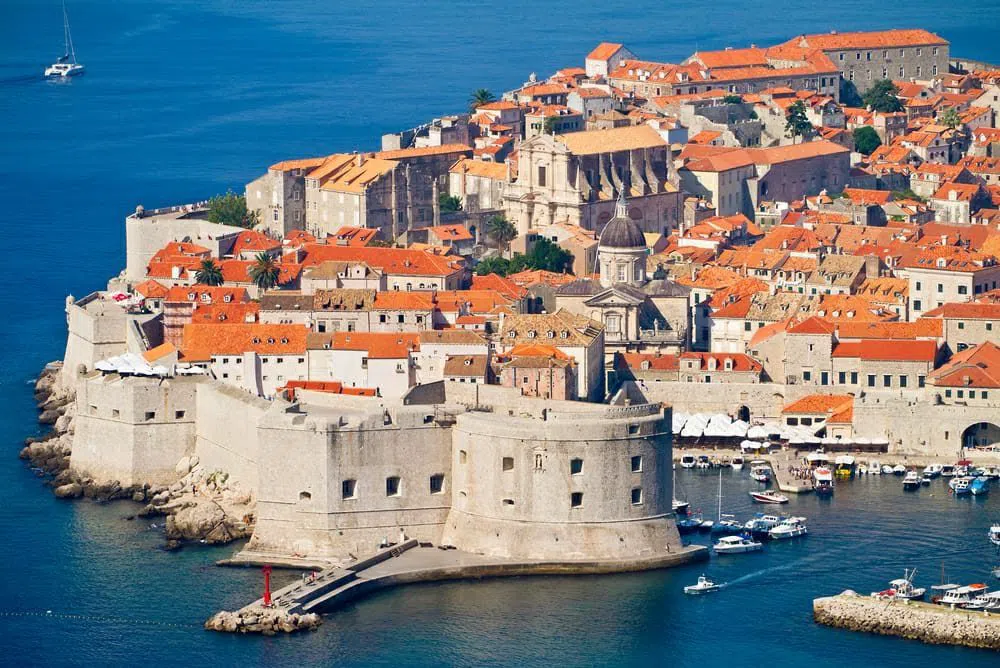
There is a moment, usually about a third of the way round, when you stop thinking of Dubrovnik's ramparts as scenery and start reading them as an argument. Every re-angled bastion, every casemate cut into the limestone, is a decision made by a small maritime republic that intended to survive whatever the century threw at it — the Ottomans, the Venetians, an earthquake, and, within living memory, a siege. The walls are the reason you came, and once you understand what they were built to do, the whole city sharpens into focus.
This guide walks the circuit the way I'd send a friend round it: where to begin, what to climb, which forts are already in your ticket, which suit a couple and which swallow a coach party, and where the real story sits under the on-screen one. Prices are current for 2026, quoted in euro (Croatia's currency), and the timing advice is the part I'd underline twice.
Start at the gates
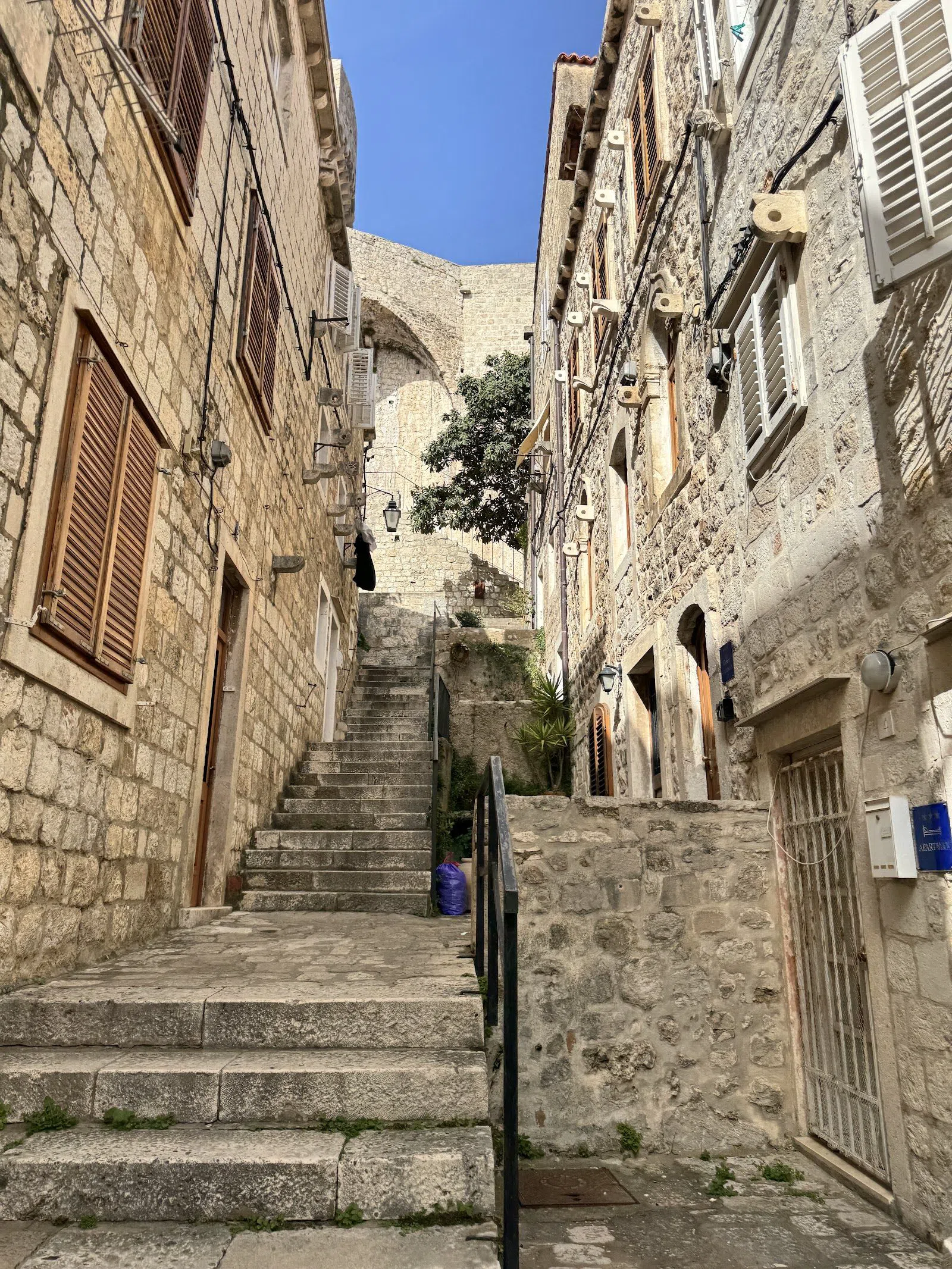
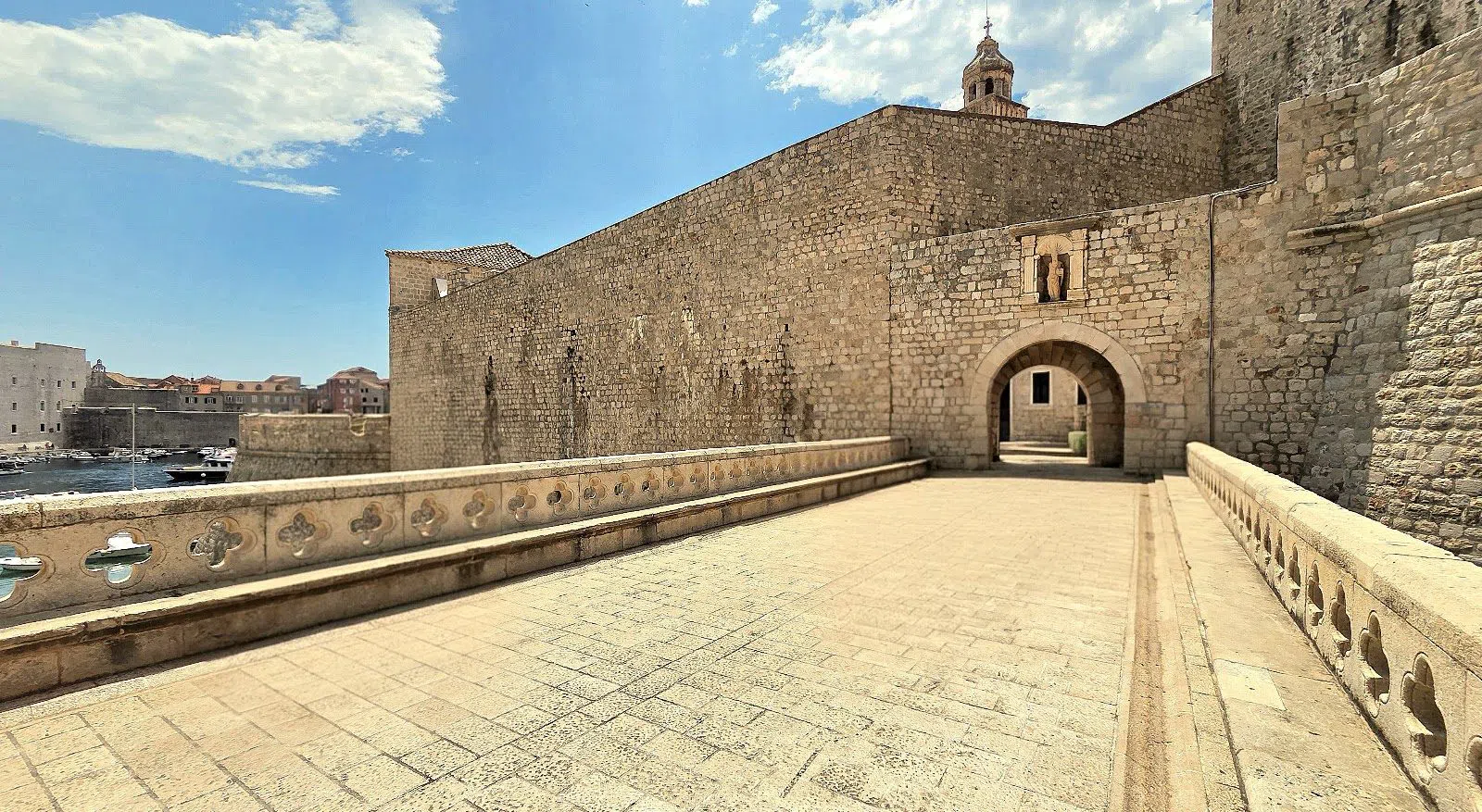
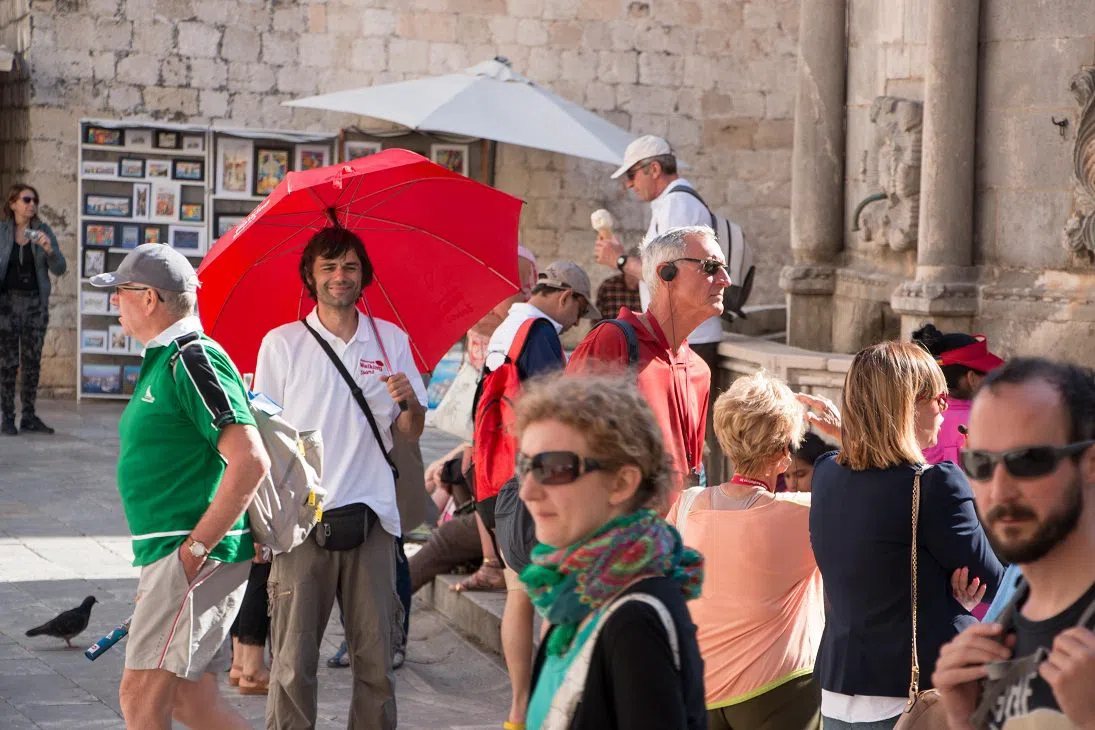
Every walls itinerary has a natural front door, and it is the Pile Gate (Vrata od Pila), on the western edge of the Old Town. It's free, always open, and it is where the guided groups muster — look for the raised coloured umbrellas and you've found the morning scrum. The gate itself is worth two minutes of attention before you plunge through: a stone bridge, a drawbridge recess, and a right-angled entry designed so no attacker could charge straight in. Yes, it doubled as a riot scene on television. It was also, for centuries, the only controlled land approach into a republic that took its independence seriously enough to carve Libertas over its defences.
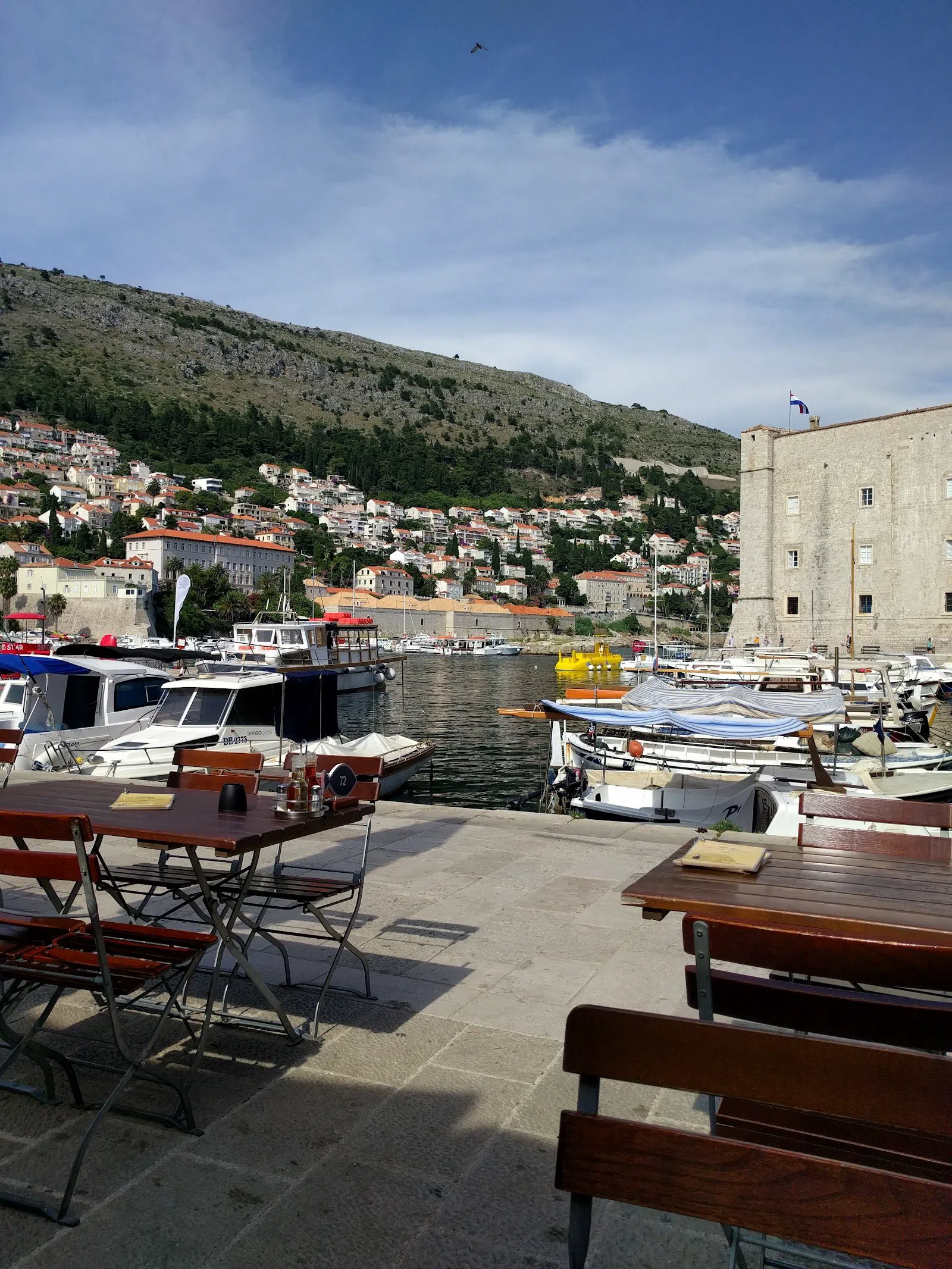
Most visitors never bother with the eastern equivalent, which is a small tragedy. The Ploče Gate (Vrata od Ploča), on the far side of the Old Town, is free, open, and reliably calmer than Pile. If you're travelling in a group and need somewhere to regroup without being swept along by the crowd, this is it. It frames the Old Harbour beautifully and sits within a two-minute walk of two forts most itineraries forget, so I'd plan your circuit to finish here rather than start.
Plan your Dubrovnik trip
Live prices from our booking partners.
Free cancellation on many rooms. We may earn a commission when you book.
The circuit: what you're actually walking
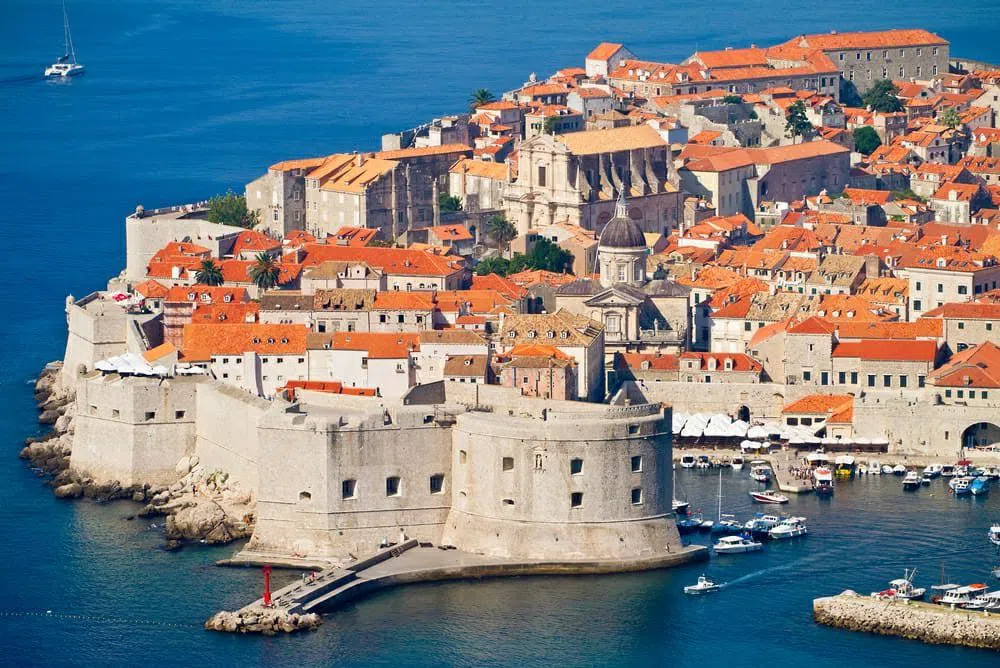
The Walls of Dubrovnik (Gradske zidine) are the headline, and they earn it — a complete, walkable medieval curtain wall roughly two kilometres round, unbroken, ringing the entire Old Town. Entry is €40 for adults from April to October and €15 from November to March, and — this matters — the winter ticket and the peak ticket both include Fort Lovrijenac. In peak season, buy a timed ticket online; the walkway is genuinely narrow in stretches and the one-way anticlockwise flow only works if numbers are managed. Groups are welcome, there's no door policy, but the path was built for archers, not for two coach parties passing.
Here is the single most useful sentence in this guide: go at opening or in the late afternoon. The cruise ships disgorge mid-morning and the wall-top becomes a slow-moving queue between roughly 10am and 2pm. Arrive for the first entry and you'll have the sea-facing ramparts nearly to yourself in cool light; come back after four and you'll catch the stone turning gold with the crowds thinning ahead of dinner. The middle of the day is the one window I'd actively avoid.
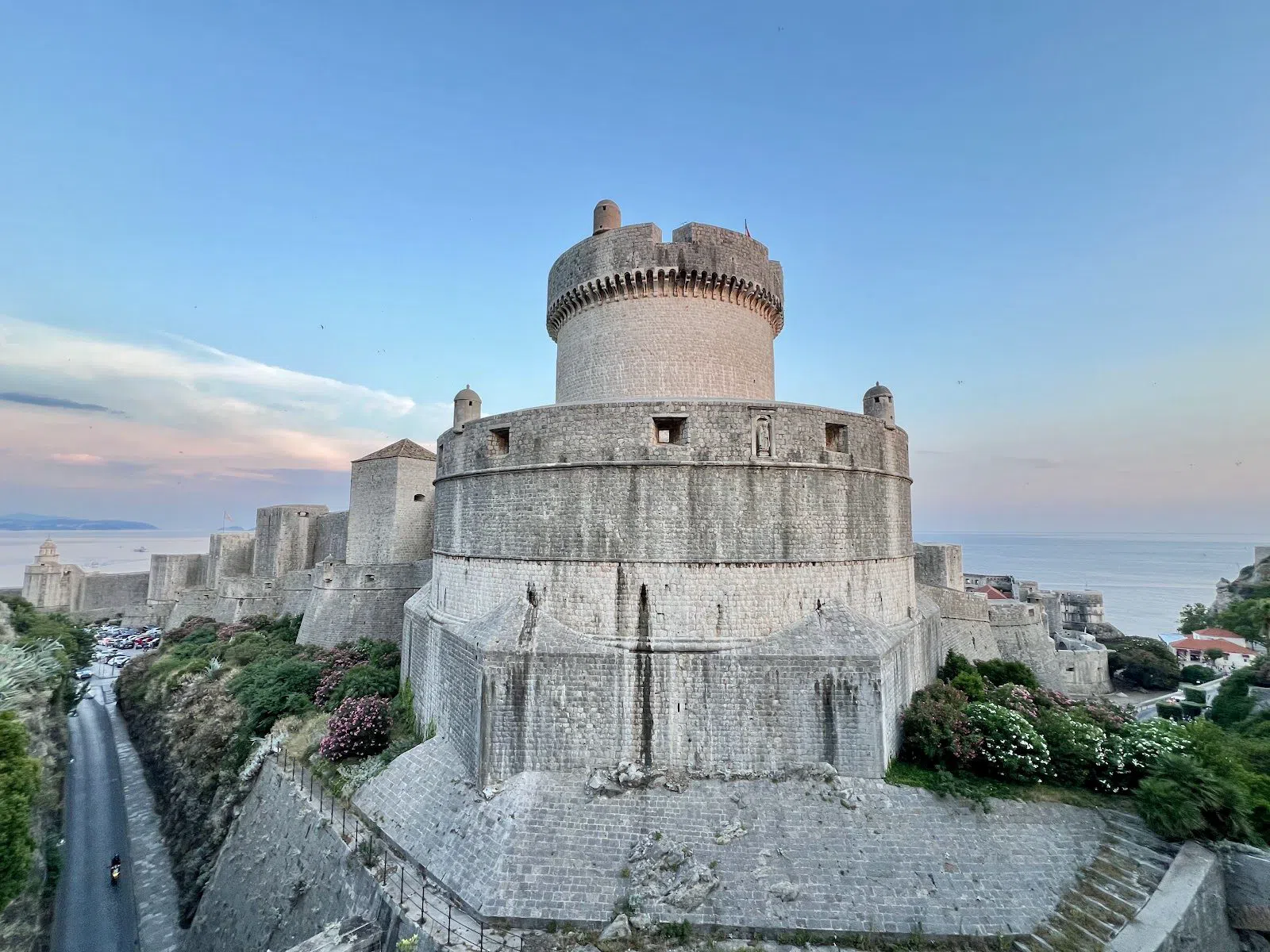
The circuit's literal high point is Fort Minčeta (Minčeta Tower), the great round bastion crowning the landward corner, included in your walls ticket. On screen it stood in for the House of the Undying; underneath that, it's a genuine piece of Renaissance military engineering — reworked in the 15th century by the Florentine Michelozzo and finished by the Dalmatian master Juraj Dalmatinac, precisely because the fall of Constantinople in 1453 had concentrated every coastal republic's mind. The spiral stair to the crown is narrow and bottlenecks badly at midday. Climb it in your first twenty minutes on the wall or you'll be queuing on the steps.
Farther round, on the seaward side near Pile, you pass through Fort Bokar (Tvrđava Bokar), and "through" is the point — it's on the route, so groups flow into it by default. This is one of Europe's oldest casemated forts, and the one place on the whole circuit where you step inside the wall, into the defensive galleries and gun chambers rather than along the top of them. The interior is tight and single-file, so a large group will string out, but don't treat it as a detour to skip. It's the moment the wall stops being a viewpoint and becomes a machine.
The forts that stand apart
Two of the best fortifications aren't on the wall-top at all, and both are quietly generous with your money.
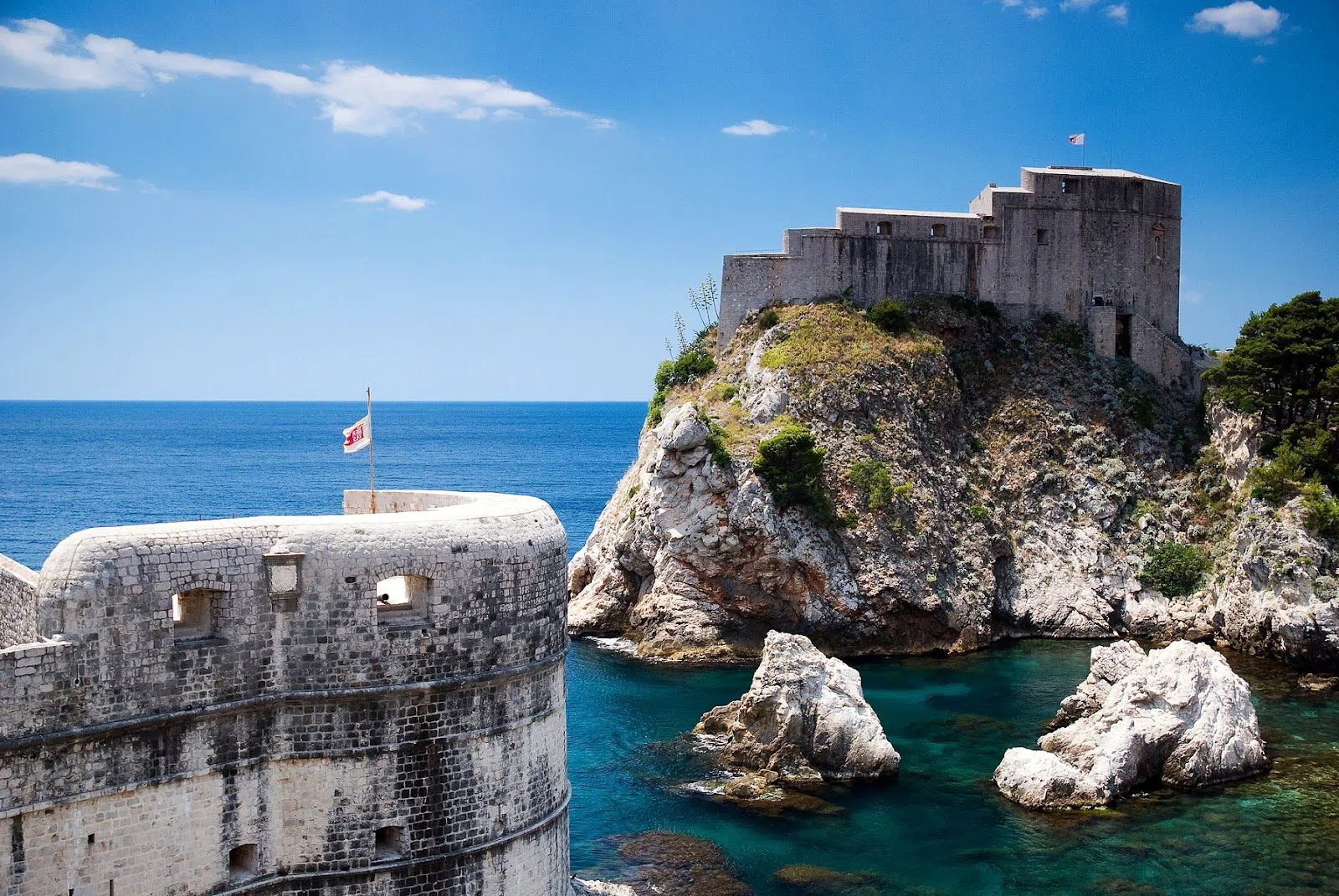
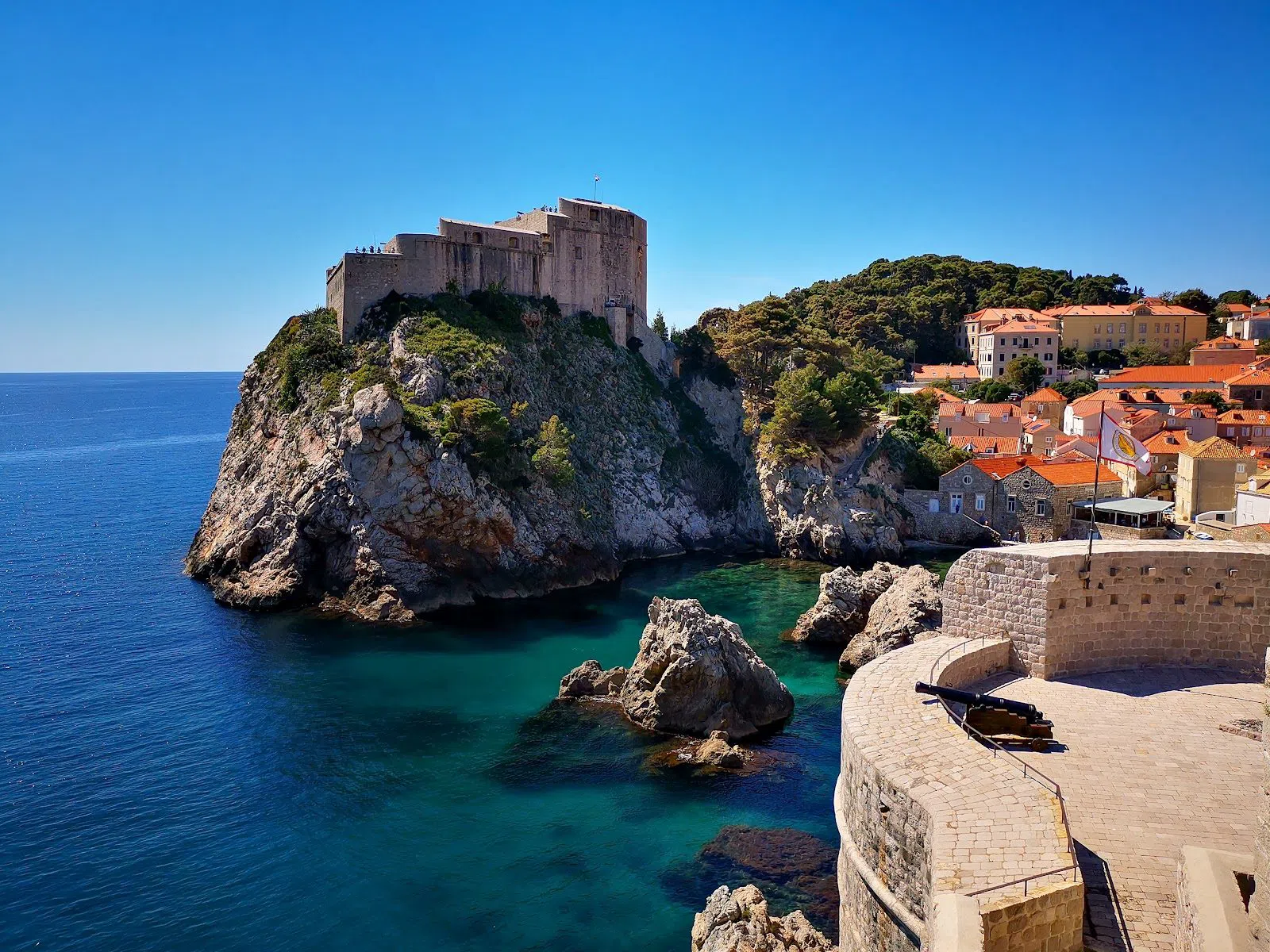
Fort Lovrijenac (St Lawrence Fortress) is the dramatic one, perched on a 37-metre crag just outside the western walls above Pile bay — Dubrovnik's own Gibraltar, and the Red Keep to anyone who came for the show. What the show won't tell you is carved above its gate: Non bene pro toto libertas venditur auro — freedom is not well sold for all the gold. That was the republic's operating principle, not a set dressing. Crucially, entry is free with your City Walls ticket, valid for up to three days after your walk, so there's no reason to miss it and every reason not to cram it into the same exhausted afternoon. The steep steps up from the bay are the only barrier; groups manage fine. From the top you get the best possible angle back at the main walls — the shot that finally shows you the scale of what you've just circled.
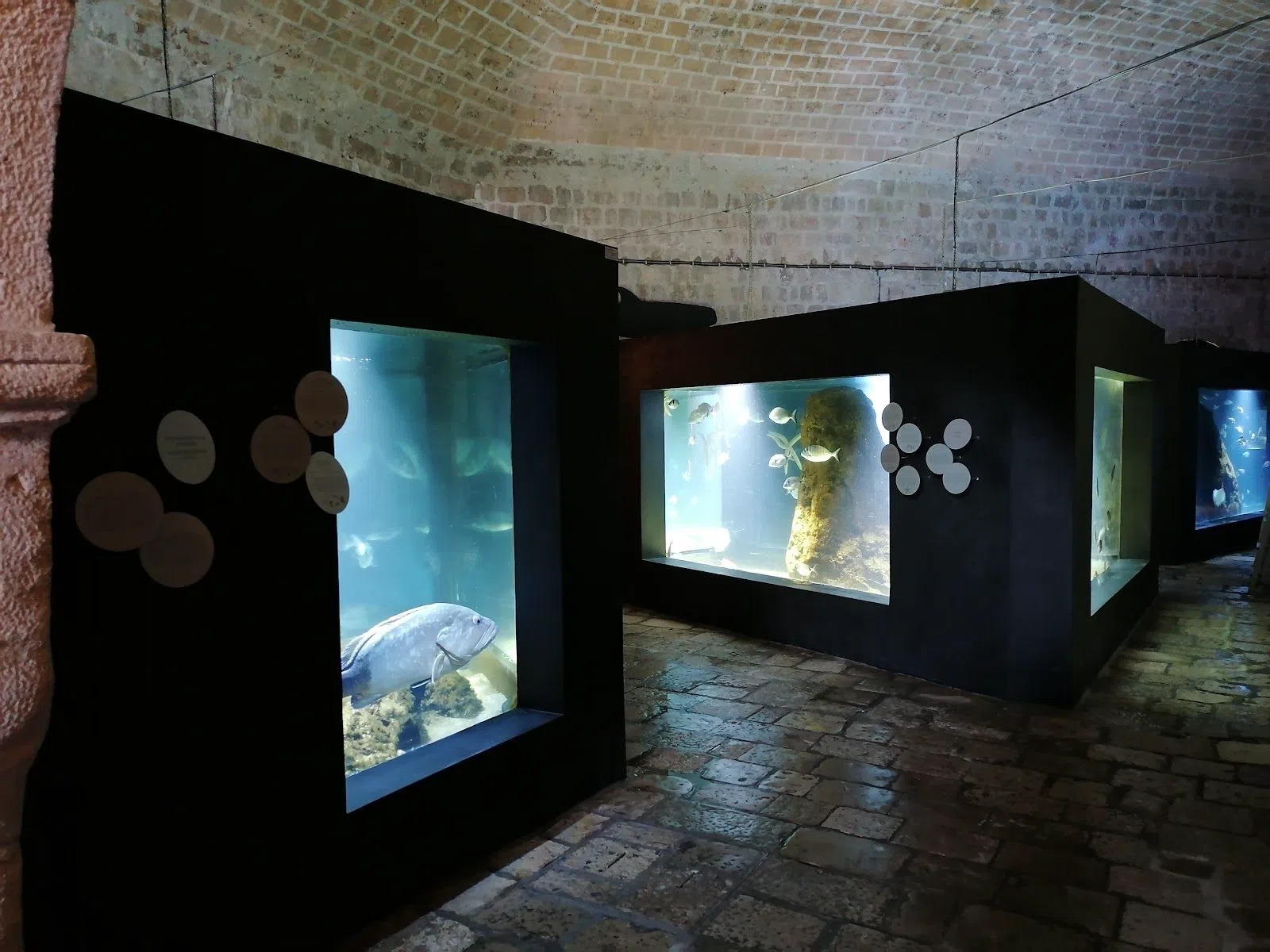
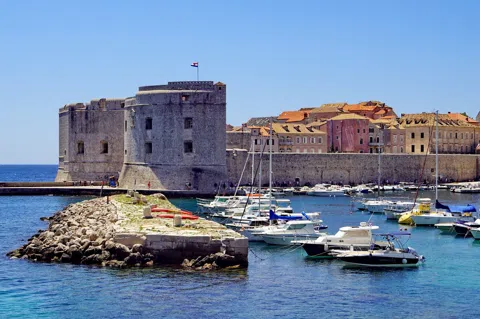
Down by the Old Harbour, St John's Fortress (the Maritime Museum & Aquarium) is the cool, shaded antidote to a hot day on the ramparts. This is the fort that once physically chained the harbour mouth shut against raiders, and it now houses the story of Dubrovnik's seafaring — the ships, the trade, the reach of a republic whose merchant fleet was once among the largest in the Mediterranean. Reckon on about €10 for either the museum or the aquarium, or roughly €20 combined. It's group-friendly, rarely crowded, and genuinely good for families or for anyone flagging in the afternoon heat. One firm note: it's closed on Wednesdays, so don't build your only harbour afternoon around it mid-week. It pairs naturally with the nearby Ploče Gate.
The high ground — and the honest history
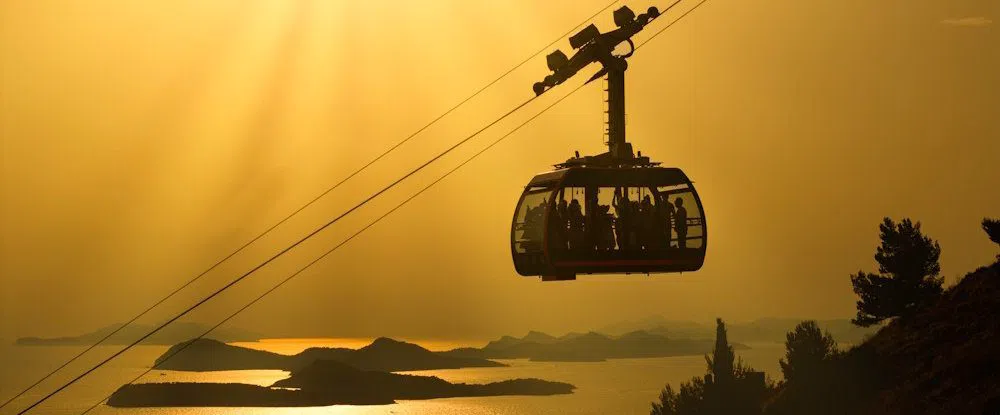
To understand the walls, you have to look down on them, and to do that you go up Mount Srđ. The Dubrovnik Cable Car does it in a few minutes: high-capacity cabins carrying around 30 people, built for groups, at roughly €27 return or €15 one-way. Pre-book a timed ticket in peak season — the queues at the base station are the worst bottleneck in the city after the wall-top itself. What you get at the top is the single best overview in Dubrovnik: the entire circuit laid out below like a diagram, the terracotta roofs inside it, the Adriatic beyond. If you take one photograph in this city, take it from up here.
But the summit is not just a viewpoint, and this is where I'd ask you to slow down. Fort Imperial on Mount Srđ now holds the Museum of the Croatian War of Independence (around €8, separate from the cable car), and it is the honest counterweight to all the glamour below. During the 1991–92 siege, when the Yugoslav People's Army shelled a UNESCO-listed Old Town that had no business being a battlefield, this clifftop fort is where the city's defenders held the line. The museum interior is compact, so large groups filter through in waves, and that's no bad thing — this is a room to move through quietly. The walls you've been photographing all day took direct fire in living memory and were painstakingly restored; the scorched fort up here is why they're still standing to be photographed. Come up for the view, but don't leave without the context.
After dark, and the hole in the wall
Not every fortification behaves itself once the sun goes down. Fort Revelin (Culture Club Revelin), the great bastion guarding the eastern approach beside the Ploče Gate, is a monument and small exhibition space by day and one of Europe's largest club nights by dark, with a capacity around 2,000. It runs May to October, entry runs roughly €25–50 depending on the event, and there is a real door: smart-casual dress code, security on the gate, no beachwear or flip-flops. If clubbing inside a medieval fort is your idea of a night, it's a spectacle; if it isn't, the daytime terrace and exhibition are far cheaper and far quieter. Either way, know before you go that this is the one wall fortress with a bouncer.

For something at the opposite end of the scale, Cafe Buža — the famous "hole in the wall" — is exactly what it sounds like: you step through the fortification itself, via a doorway in the seaward wall, onto rock terraces on the cliff-ledge below. Drinks run about €5–9, it's cash only, there are no reservations, and the terraces are tiny, so this is a spot for a couple or a pair, not a group. It packs out at sunset; seating has been trimmed in recent seasons, so come a little before golden hour if you want a perch on the rocks rather than a standing spot behind the crowd. The setting — the wall at your back, the open Adriatic in front — is genuinely unbeaten, and worth the mild scramble.
Going with a guide
If you'd rather have the history decoded than walk the circuit blind, Dubrovnik Walking Tours run scheduled small-group departures and private options covering both the fortifications and the filming locations. Guided walks run roughly €25–45 per person — but read the small print, because the walls entry ticket is usually added on top of that, not included. Book direct and confirm exactly what's covered before you pay. For a group that wants the Ragusan history and the on-screen geography untangled in one go, it's the efficient choice; independent-minded couples with an afternoon to spare will do perfectly well with this guide and a timed wall ticket.
The practical part
Timing. This is the whole game. Walk the walls at the first entry of the day or from late afternoon; avoid roughly 10am–2pm, when the cruise crowd owns the ramparts. Climb Minčeta early to beat the stair queue. Save Lovrijenac for a separate day — your ticket covers it for three days. Don't plan St John's Fortress for a Wednesday, when it's closed.
Money. Croatia uses the euro. Cards work almost everywhere, but Cafe Buža is cash only, so carry a little. Card and phone payment are fine for the walls, cable car, museums and the club.
Getting around. The Old Town is compact and entirely on foot — and it's genuinely stepped and cobbled, so bring shoes with grip for the wall-top and the climb to Lovrijenac. Pile Gate is the western hub where taxis and buses drop; Ploče Gate is the calmer eastern entrance. For Fort Imperial and the summit view, the cable car is the fast way up; pre-book in season.
Budget, roughly. The walls are €40 in season (€15 in winter) and bring Lovrijenac free. Add about €27 for the cable car return, €8 for the Srđ war museum, and €10–20 at St John's if you want the maritime story. A drink at Buža is €5–9; a night at Revelin, €25–50. Do the walls, the cable car and one museum and you have a full, honest day for well under €100 a head.
For somewhere to sleep within striking distance of the Pile Gate, start with a Dubrovnik hotel search, and for the rest of the city beyond the ramparts, the wider Dubrovnik guide picks up where the walls leave off. The circuit is the argument this city has been making for 500 years. Give it a morning, look down on it once from Srđ, and you'll hear it.
Before you go
How much does it cost to walk the Walls of Dubrovnik in 2026?
Adult entry is €40 from April to October and €15 from November to March. Both tickets include Fort Lovrijenac, which stays valid for up to three days after your walls walk. Fort Bokar and Fort Minčeta are on the circuit and included; the cable car, St John's Fortress and the Srđ war museum are separate.
What's the best time of day to walk the walls and avoid crowds?
Go at the first entry of the morning or from late afternoon. The cruise crowd fills the ramparts roughly between 10am and 2pm, which is the one window to avoid. Early light gives you the sea-facing walls almost to yourself, and late afternoon turns the stone gold as numbers thin before dinner.
Which Dubrovnik forts are included in the City Walls ticket?
Fort Bokar and Fort Minčeta sit on the circuit itself, and Fort Lovrijenac is free with your walls ticket for up to three days. St John's Fortress (Maritime Museum & Aquarium), the cable car, and Fort Imperial's war museum on Mount Srđ are all ticketed separately.
Is Fort Revelin a fortress or a nightclub?
Both. Fort Revelin is a monument and small exhibition space by day and one of Europe's largest club nights (Culture Club Revelin) by night, running May to October. Club entry runs about €25–50 by event, with a smart-casual dress code and door security — no beachwear or flip-flops. The daytime terrace and exhibition are far cheaper and quieter.
Is the Dubrovnik cable car worth it and do I need to book ahead?
Yes — it delivers the single best overview of the complete wall circuit and takes you to Fort Imperial's war museum on Mount Srđ. It's about €27 return or €15 one-way in cabins holding around 30 people. Queues at the base station are among the worst in the city in peak season, so book a timed ticket in advance.