 In this area
The Dubrovnik issue
Babin Kuk, Dubrovnik: the quiet headland where the city slows down
At Dubrovnik’s green northern tip, Babin Kuk trades medieval drama for pine shade, cliff-top walks and proper swimming — with the Old Town still only a bus ride away.
By Petra MiličevićDubrovnik beyond the walls
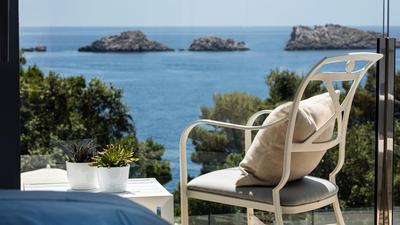
At the far green tip of the Lapad peninsula, Babin Kuk does something Dubrovnik rarely allows itself: it takes a breath. The day here is set by the sun rather than a cruise-ship schedule, and by late afternoon the whole headland tilts west to watch the Adriatic turn copper behind the Elaphiti Islands. That, really, is the pitch — a resort district with sea-view balconies, big pools and enough quiet to hear the cicadas. You are still only about 20 minutes by bus from the medieval walls, but the mood is different enough to feel like a small act of rebellion.
What Babin Kuk is known for
Babin Kuk is less a neighbourhood than a wooded garden with hotels dropped into it. There are very few permanent residents, almost no shops, and no real town centre to speak of. What it has instead is space: umbrella pines, olive groves, a coast path running high above the water, and coves where the loudest sound is a ladder clanging as someone climbs out of the sea. The crowd is a practical one — families with small children, older couples on package stays, repeat visitors who have already done the walls, the cable car and the kayak tour and now want to swim, read and eat lunch in the shade without anyone hurrying them along.
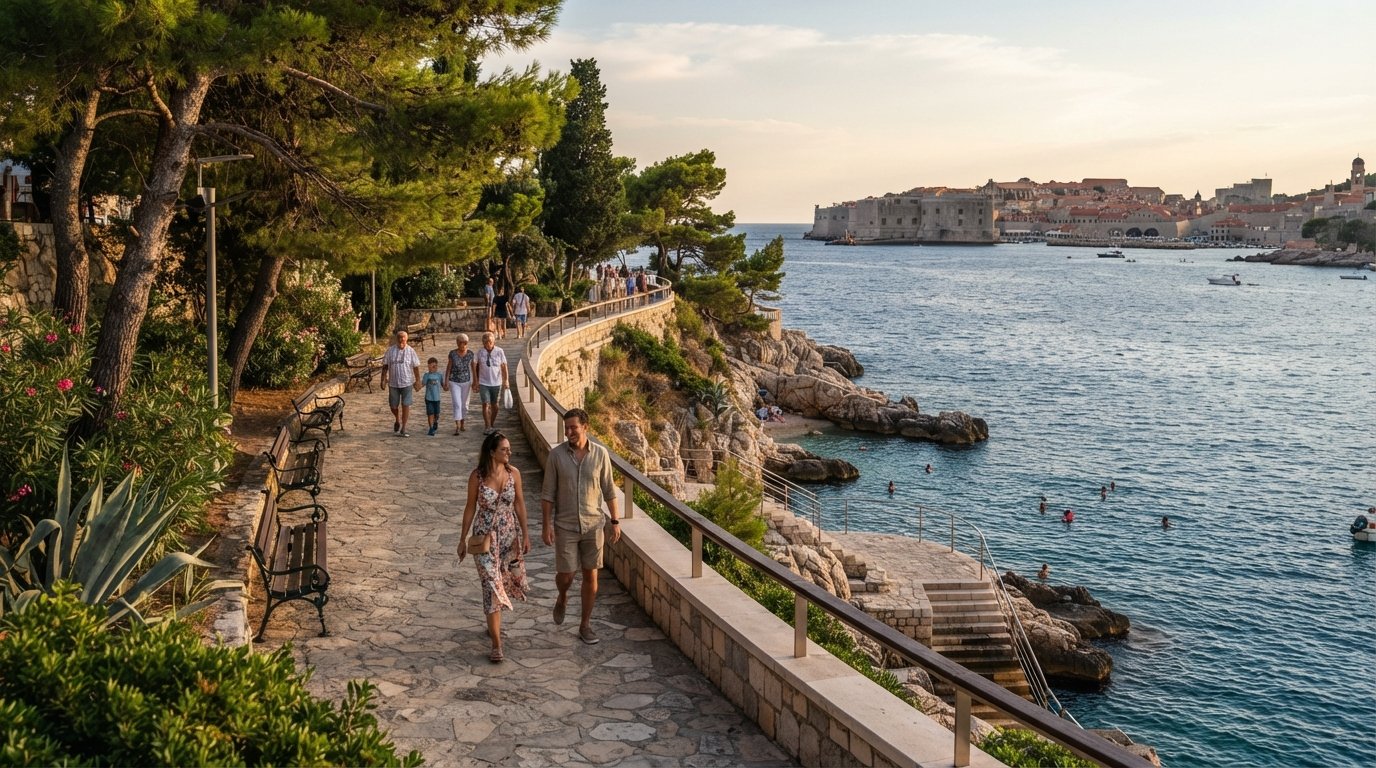
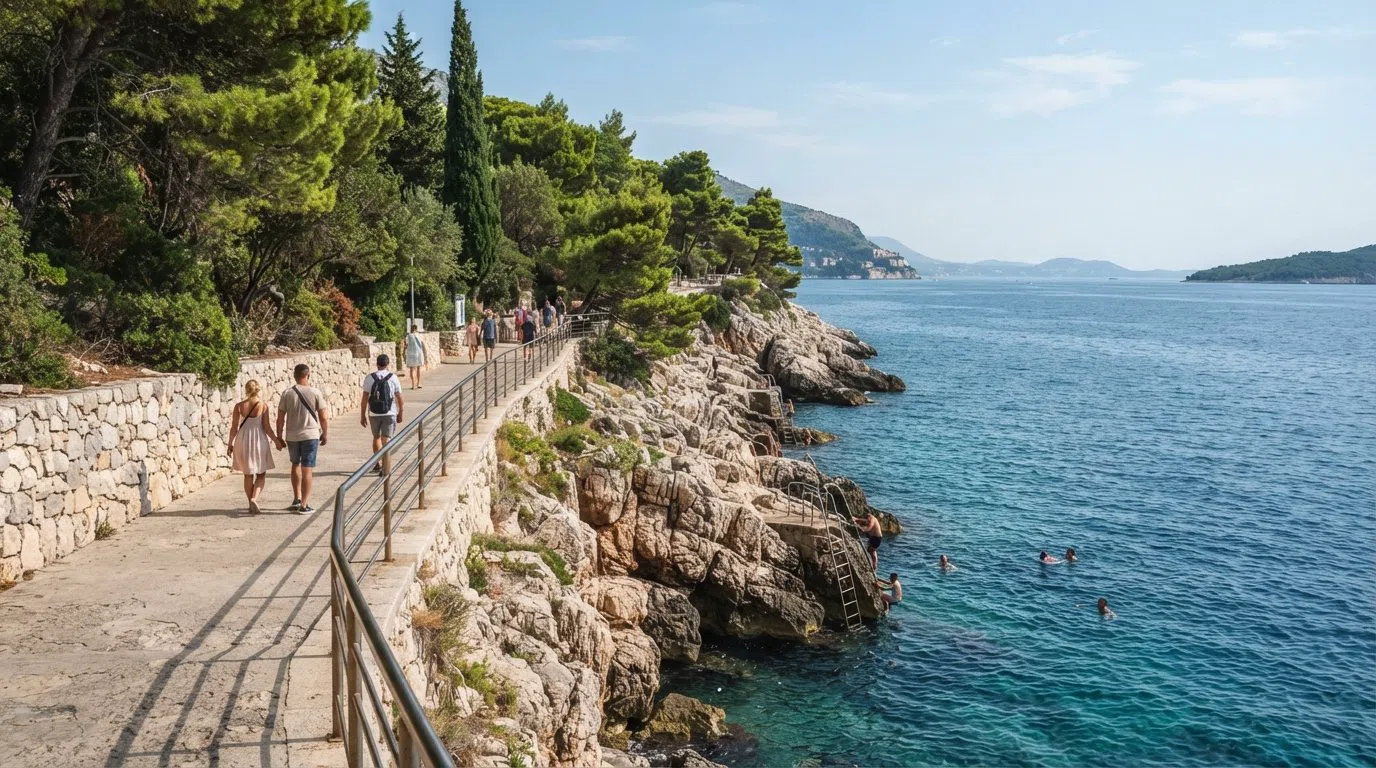
The peninsula’s defining feature is the recently renovated Šetalište Nika i Meda Pucića, the cliff-top promenade most people just call the Babin Kuk coastal walk. It loops the headland above the water, mostly flat, pram-friendly and dotted with benches, with regular steep steps dropping to rock ledges fitted with metal ladders. The whole thing takes about 45 minutes to an hour if you do it properly, which in this part of Dubrovnik means slowly enough to notice the changing angle of the light.
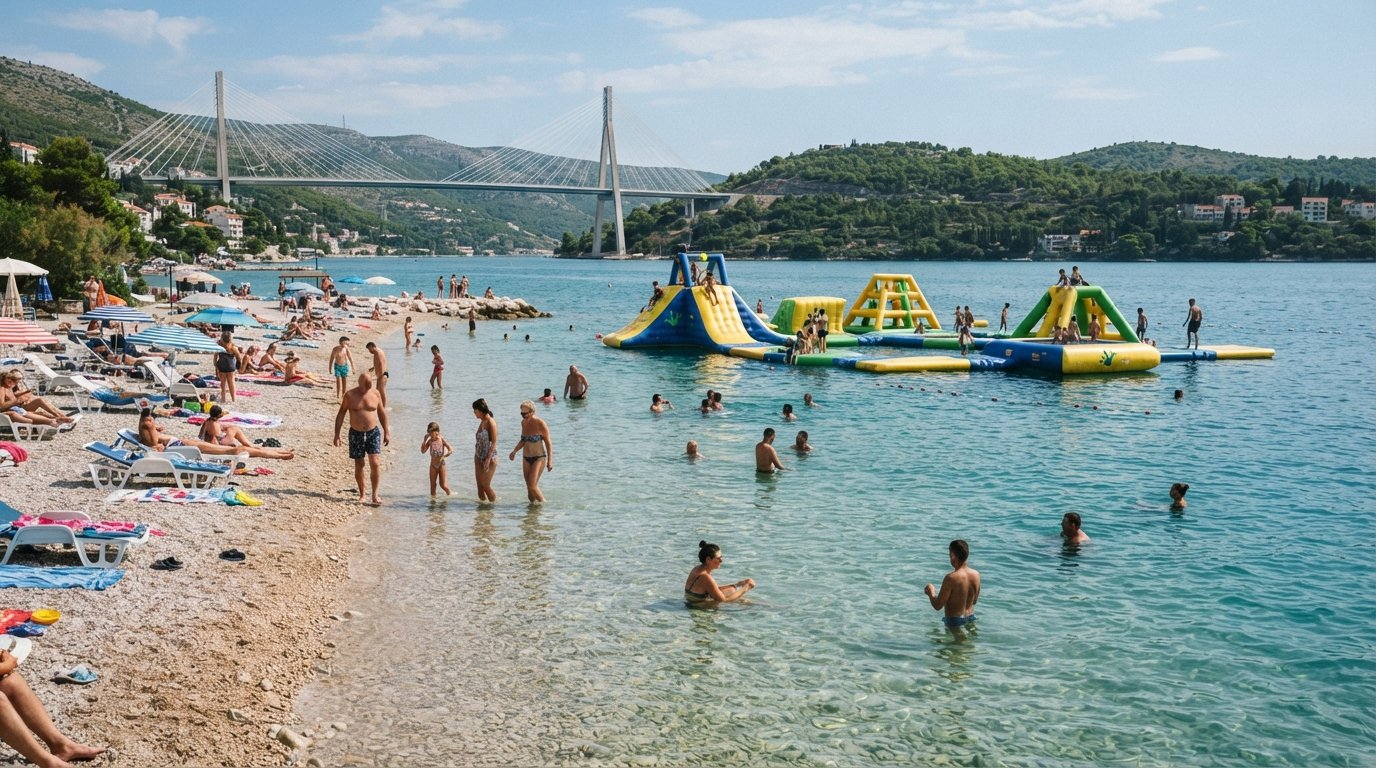
The walk is also the best way to understand the peninsula’s geography. On one side are the hotel complexes — several under the Valamar banner and the Importanne Resort — tucked into the greenery. On the other are the beaches, each with its own character. Copacabana Beach, on the north-west shore, is one of the longest beaches in Dubrovnik, a sheltered curve of pebble and concrete with shallow water and a floating Wibit inflatable assault course. Families love it because children can burn off energy there without needing to negotiate a cliff face or a moral argument about lunch. From the sand, you look straight out at the soaring Franjo Tuđman Bridge over the mouth of Gruž harbour, which gives the whole scene a slightly engineered grandeur. A short walk south, Cava Beach is smaller and more grown-up, with a naturist section and the polished Coral Beach Club. Then there is Val President Relax Beach, beneath the President Hotel, a Blue Flag pebble beach with a dive centre, lifeguard and Elaphiti views — the sort of place where you can move from a swim to a nap without changing your horizontal orientation too much.
What Babin Kuk is not is just as important. It is not a place for spontaneous bar-hopping, nor a patchwork of independent streets with a different lunch spot every ten metres. It is a resort headland. If you accept that, it becomes very easy to like.
Plan your Dubrovnik trip
Live prices from our booking partners.
Guests & rooms
Free cancellation on many rooms. We may earn a commission when you book.
Where to eat & drink
Dining on Babin Kuk itself is thin on the ground, and that is the peninsula’s one genuine drawback. The upside is that the few places here are properly worth your time, and Lapad’s fuller line-up is only a short walk or one bus stop south.
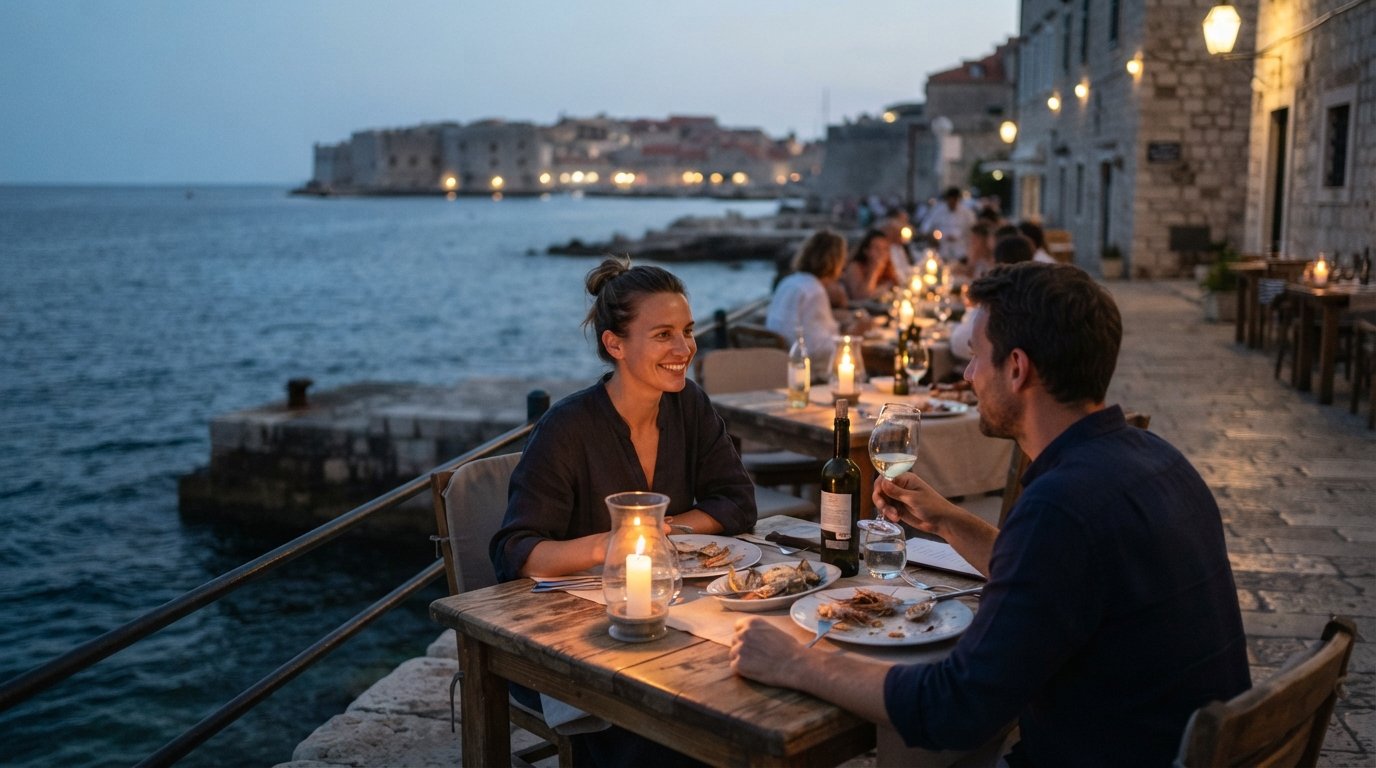
The stand-out is Restaurant Levanat, on the coast path at Šetalište Nika i Meda Pucića 15, in the little bay between Lapad and Babin Kuk. Its stone-and-candlelit terrace hangs directly over the water, and it does exactly what a seaside restaurant ought to do: let the setting do some of the talking while the kitchen stays focused on Mediterranean, seafood-forward plates. It is reliably the most romantic table on this side of the city, but it is also priced accordingly, so this is a place for a proper sit-down rather than a casual “let’s see what happens” dinner. In season, roughly March to October, book ahead.
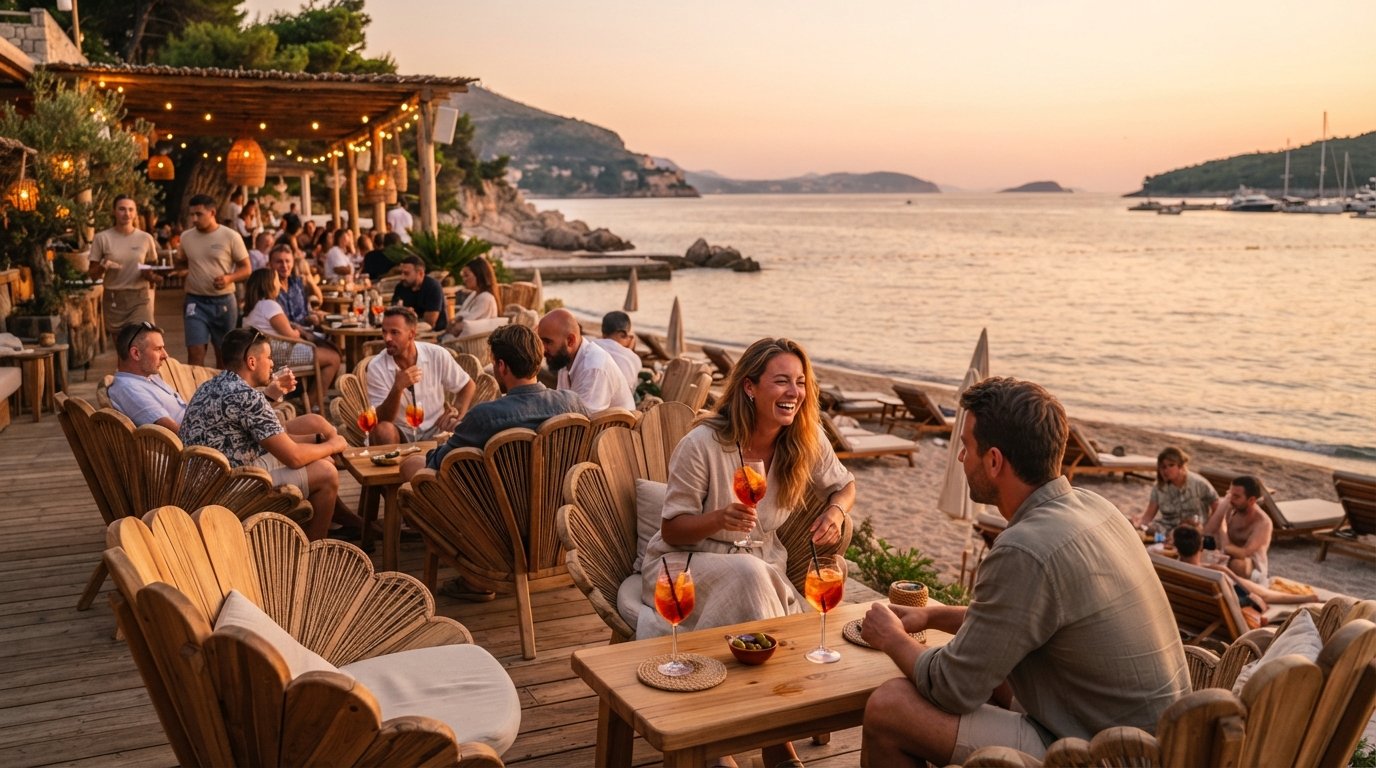
Down on Cava Beach, the shell-shaped Coral Beach Club is the peninsula’s polished all-day spot. By day it is all open kitchen, cocktails, oysters, octopus, catch-of-the-day and Angus steak; by night it shifts into a low-lit dinner service with Croatian and Italian wines. It is the liveliest food-and-drink address in Babin Kuk, though the per-person minimum spend means you should think of it as a treat rather than a casual drop-in. There is a difference, and your bill will be delighted to remind you of it.
For a more formal meal, the La Mar restaurant at the President Hotel serves show-cooked seafood and Mediterranean dishes across a wide terrace at the headland’s tip, and non-guests are welcome. It has the resort’s best “we are absolutely on holiday now” energy, especially if you arrive in that hour before sunset when everyone suddenly becomes more generous with ordering another glass.
Just over the boundary at Hotel More, the Cave Bar More is the one place nearby that feels like a proper discovery, even though everyone knows about it. It is a cocktail bar built inside a natural sea cave 40 metres deep, with a glass floor over a rock pool, and it is worth the short walk for the setting alone. Above it sits Restaurant More, a sea-view Mediterranean seafood restaurant that works well if you want dinner with a little more polish than a beach club but less fuss than a formal tasting-room mood.
Beyond that, eat in your hotel or head into Lapad. Babin Kuk is not trying to be a restaurant district, and frankly it would look embarrassed if you asked it to.
Going out
Nobody comes to Babin Kuk for a big night, and that is the honest truth to plan around. The evening here is a wind-down, not a warm-up.
The closest thing the peninsula has to a scene is Coral Beach Club, where music, cocktails and candlelit dinner stretch the day into dusk. Even then, it is more sunset-and-wine than dancefloor. Copacabana’s beach bar carries its watersports-and-cocktails energy through the afternoon before quietening down, which is what you want from a beach that has already done enough for the day.
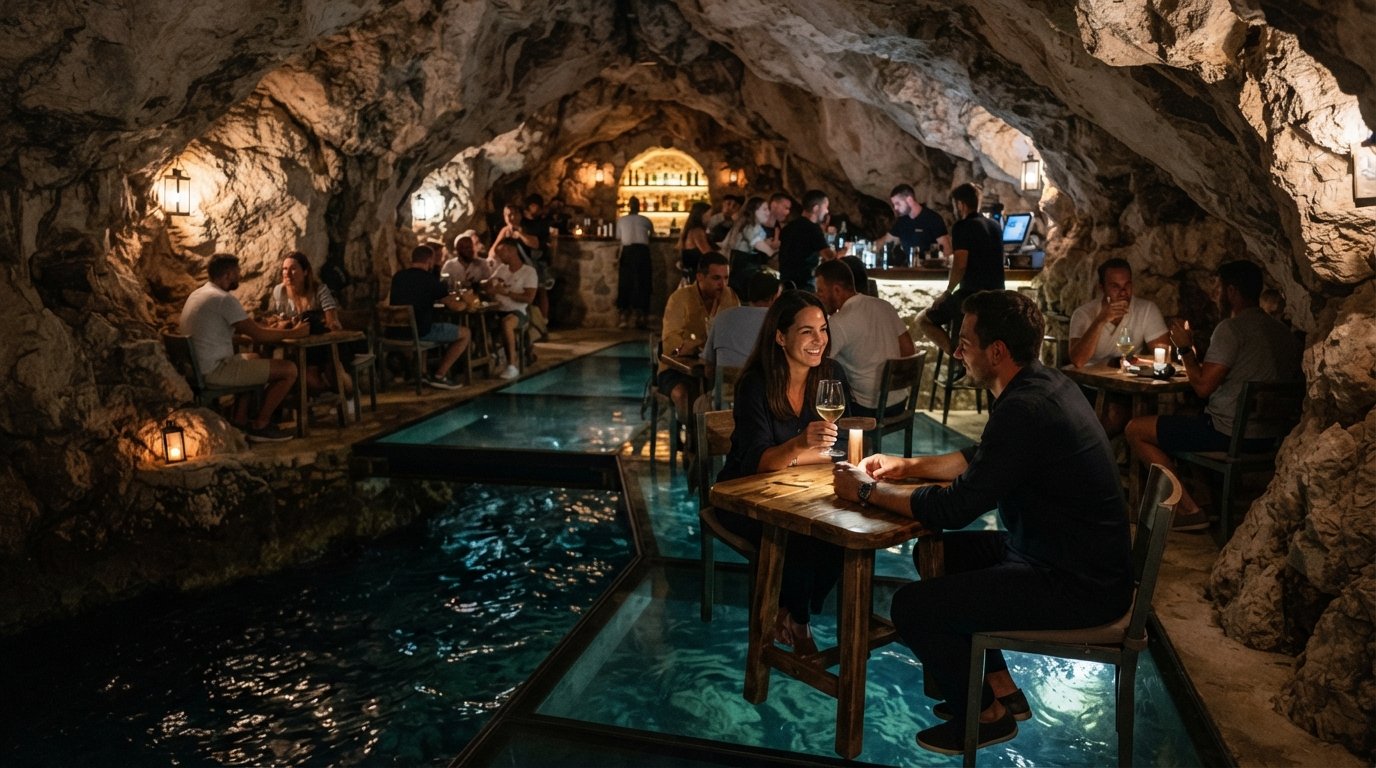
The best after-dark move that is properly of Babin Kuk is a drink in the Cave Bar More, where the natural cave and glass floor over the sea do most of the work. It is atmospheric without trying too hard, which is a rare and useful quality in a resort district.
If you want a rooftop, the Royal Blue Hotel rooftop bar gives you panoramic sunset views over Lapad Bay. That is about as lively as Babin Kuk gets once the sun is down: a cocktail, a view, a bit of sea air, and then the satisfying realisation that you are not obliged to be anywhere more exciting.
For anything actually buzzy — promenade bars, a proper cocktail list, a club — you head south to Lapad’s Šetalište kralja Zvonimira or take the bus into the Old Town. Babin Kuk is content to let the rest of Dubrovnik perform.
Things to do and what to see
The signature thing to do here costs nothing: walk the Šetalište Nika i Meda Pucića. Start from the Lapad side around Sunset Beach and follow the renovated cliff-top loop past Copacabana, the Royal Blue and Neptun hotels at the point, then down the western shore. It is mostly flat, with benches and those useful stair drops to rock ledges where metal ladders let you swim straight into the sea. Do the whole loop in about 45 to 60 minutes, though in reality you will stop to stare at the water, then stop again because the water has changed colour.
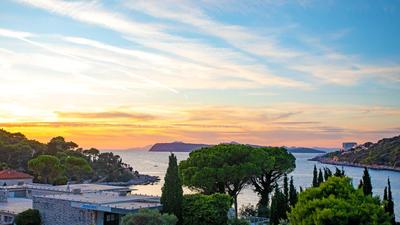
The western side is especially good late in the day, when the sun sinks behind the Elaphiti Islands and the islet of Daksa. This is the sort of sunset that makes even the most cynical hotel guest lean on a railing and pretend they have discovered something. They have, to be fair: a very good promenade.
Swimming is the other main event. Copacabana Beach is the family hub — shallow, well-equipped and home to the floating Wibit water park, plus jet skis, banana boats, pedalos and parasailing. It is a place for activity, noise and children in various states of wet triumph.
Cava Beach is quieter and more scenic, with its naturist section beyond the Coral Beach Club and clear water off the rocks. If you prefer your swim with fewer moving parts, this is the one.
Val President Relax Beach is the more polished option, with its Blue Flag status, dive centre and lifeguard. The Elaphiti views are part of the package, though the water does not care whether you have paid for a package.
Off the water, Babin Kuk is a natural launch point for boat trips. Kayak and speedboat tours to the Elaphiti Islands — Koločep, Lopud and Šipan — leave from the nearby Gruž and Lapad shores, and the catamaran quay is a couple of bus stops away. That said, this is Dubrovnik, so I will say the obvious thing plainly: some boat tours are overpriced for a cove you can swim to for free. Choose accordingly.
Don’t miss in Babin Kuk
Copacabana Beach
Coral Beach Club
Coastal walking paths
Shopping
Shopping is not a reason to be on Babin Kuk, and that is not a criticism so much as a warning label. This is a resort headland, not a retail district. You will find hotel gift corners, beach kiosks selling sun cream and inflatables, and a small supermarket or two for self-caterers. That is the whole show.
For anything more, walk or hop the bus south to Lapad, whose promenade has the nearest cluster of shops, pharmacies, bakeries and a bigger grocery run. If you want fruit, vegetables, olive oil and cheese, the Gruž green market is the place to make yourself feel briefly and usefully local. Serious shopping — Croatian design, boutiques, souvenirs and the tourist strip between Onofrio and Stradun — is inside the Old Town walls.
In short: buy what you need in Lapad on the way in, and treat Babin Kuk itself as the place you switch the shopping off.
Where to stay in Babin Kuk
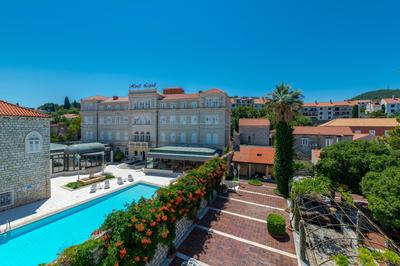
Babin Kuk is one of Dubrovnik’s most concentrated resort-hotel zones, so this is where you come for pools, sea-view balconies and beach access rather than boutique character or Old Town proximity. If that sounds bleak, it isn’t. It is simply a different use of the city.
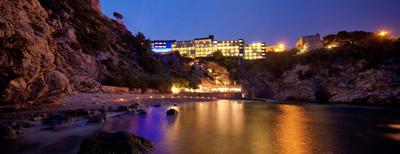
At the top end, the five-star President Hotel, Valamar Collection sits right on the headland tip with its own Blue Flag beach, indoor pool and spa. The Royal Blue Hotel, the newest property in the Importanne Resort, adds a rooftop pool and panoramic Lapad Bay views. The four-star tier is broad and family-focused: Valamar Tirena Hotel is tucked into pine-and-olive gardens near the beaches, Valamar Lacroma Hotel is an eco-certified resort with pools and easy beach access, and Hotel Royal Neptun has multiple outdoor pools, a separate children’s pool, a spa and its own Blue Flag beach.
Whichever you choose, the trade is the same: you rely on the bus or a walk for restaurants and the Old Town, but in return you get genuine quiet, greenery and swimming on your doorstep. For many people, that is the better bargain.
Hotels in Babin Kuk
Our best-rated stays in this neighbourhood. Prices are approximate “from” rates — confirmed at the provider when you continue. We may earn a commission if you book through our partners — at no extra cost to you.
In this area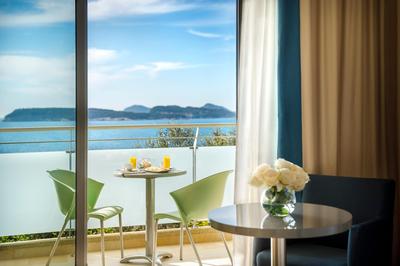 In this area
 In this area
Babin Kuk
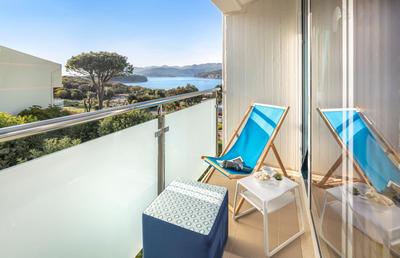
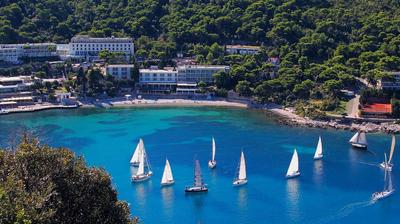
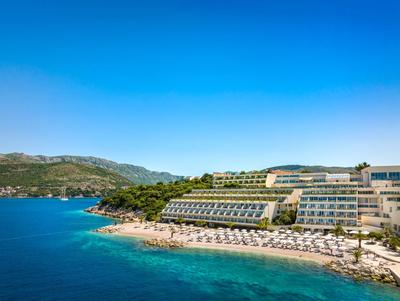
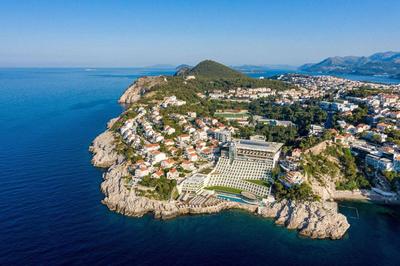
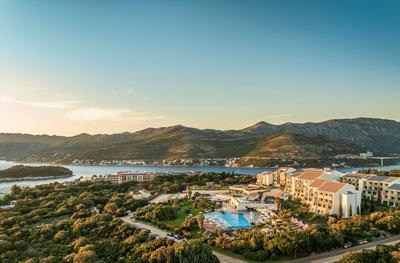
Sunny Dubrovnik by Valamar - All Inclusive
8.4· 3,659 reviews
approx. from£152 / nightSee prices
 In this area
 In this area
 In this area
 In this area
 In this area
 In this area
 In this area
 In this area
 In this area
Getting around
Babin Kuk is small and walkable within itself — you can cross the peninsula on foot in 15 to 20 minutes and loop the coast path in under an hour — but it is genuinely separate from the rest of Dubrovnik, so the bus matters.
The workhorse is Libertas line 6 (Babin Kuk–Pile), which runs every 10 to 15 minutes and reaches Pile, the western gate of the Old Town, in about 20 to 25 minutes. From there you walk straight onto Stradun. Buy your ticket in advance from a Libertas kiosk or newsstand — around €1.73 for a one-hour ride, valid in all directions for 59 minutes — rather than from the driver, which costs more and needs cash.
Line 7 links the peninsula down to the Gruž ferry and catamaran port for island-hopping. For Lapad’s restaurants and promenade you can simply walk south in 10 to 15 minutes. There is no direct city bus to Dubrovnik Airport, which is roughly 30 to 40 minutes away by road near Čilipi; use the airport shuttle from the main bus station at Gruž, or a taxi or transfer if you prefer paying for convenience.
A car is more hassle than help here. Parking is tight, the Old Town is pedestrian, and Babin Kuk is built for buses, feet and the occasional stubborn swim.
Gallery
Babin Kuk in pictures
Babin Kuk — your questions
Is Babin Kuk a good area to stay in Dubrovnik?
Yes, if a beach-and-resort holiday is what you want. Babin Kuk is quiet, green and packed with family-friendly hotels, beaches and a lovely coastal walk, and it is still only an easy bus ride from the Old Town. The trade-off is that it has almost no local life, few independent restaurants and no nightlife, so you will rely on the bus for sightseeing and dinner variety. First-time visitors who want to step out into the medieval walls should look at the Old Town or Ploče instead; Babin Kuk suits families, couples and repeat visitors who want to slow down.
How do you get from Babin Kuk to Dubrovnik Old Town?
Take Libertas city bus line 6 (Babin Kuk–Pile), which runs every 10 to 15 minutes and reaches Pile in about 20 to 25 minutes. Buy your ticket in advance from a kiosk or newsstand — it is cheaper than paying the driver — and it stays valid in all directions for 59 minutes. A taxi is quicker, but you will pay for the privilege.
What are the best beaches in Babin Kuk?
The two main beaches are Copacabana and Cava. Copacabana is one of Dubrovnik’s longest beaches — a shallow, family-friendly pebble bay with the floating Wibit water park, watersports and views of the Franjo Tuđman Bridge. Cava is a smaller, quieter cove below the hotels, with a naturist section and the smart Coral Beach Club. The coast path also has rock ledges and metal ladders for swimming straight off the shore, plus the Blue Flag Val President Relax Beach beneath the President Hotel.
Can you walk around Babin Kuk without using transport?
Yes. The peninsula itself is compact, and you can cross it on foot in 15 to 20 minutes. The coastal promenade loop takes about 45 to 60 minutes and is the best way to see the headland, especially at sunset. For Lapad or the Old Town, though, the bus is the sensible option.